Category:
Symphonic / Orchestral
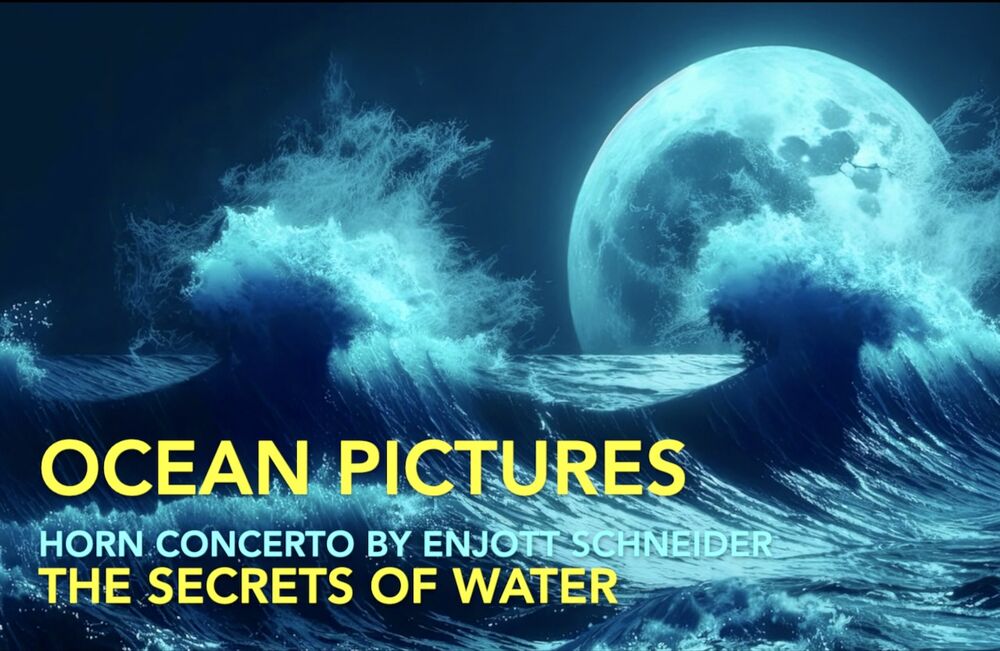
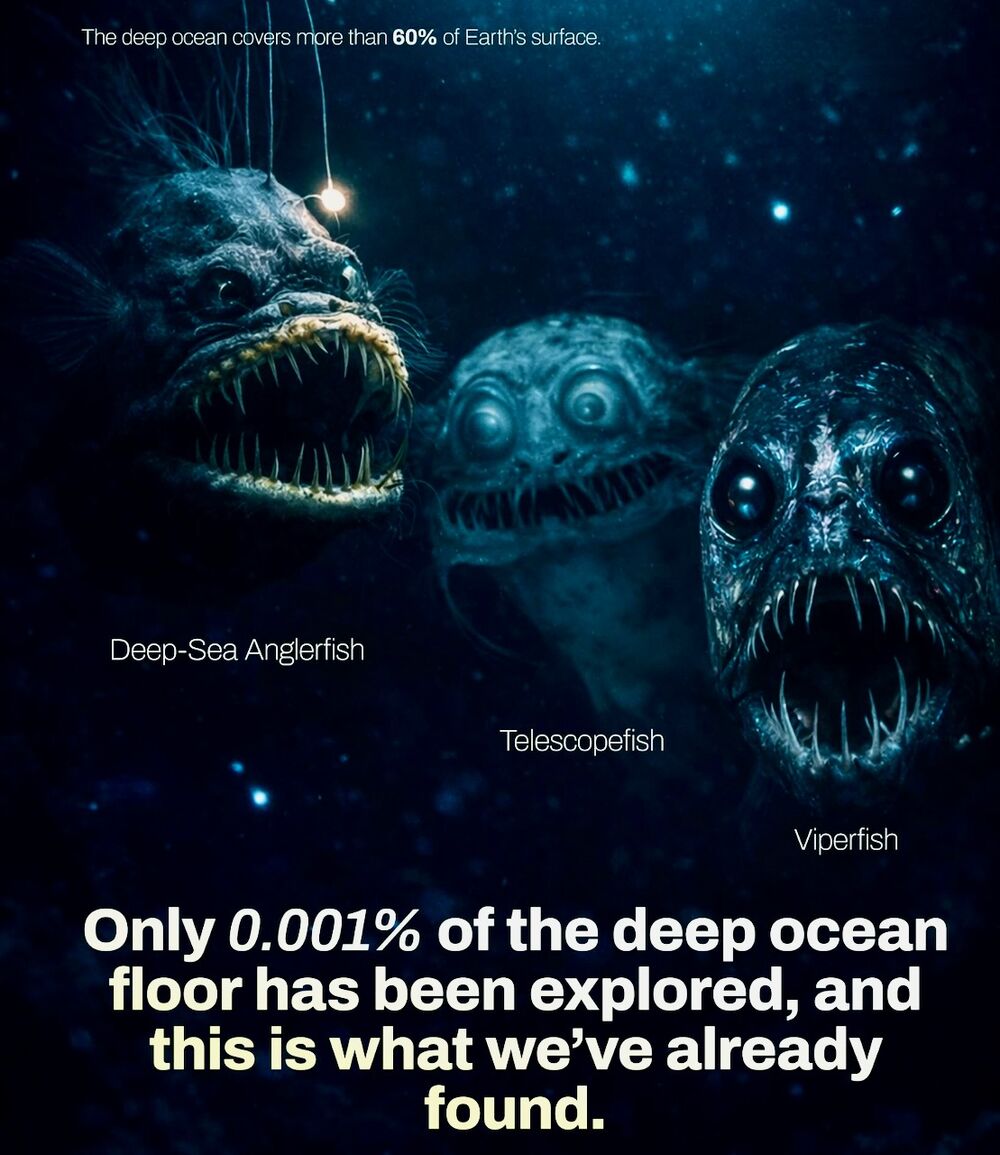
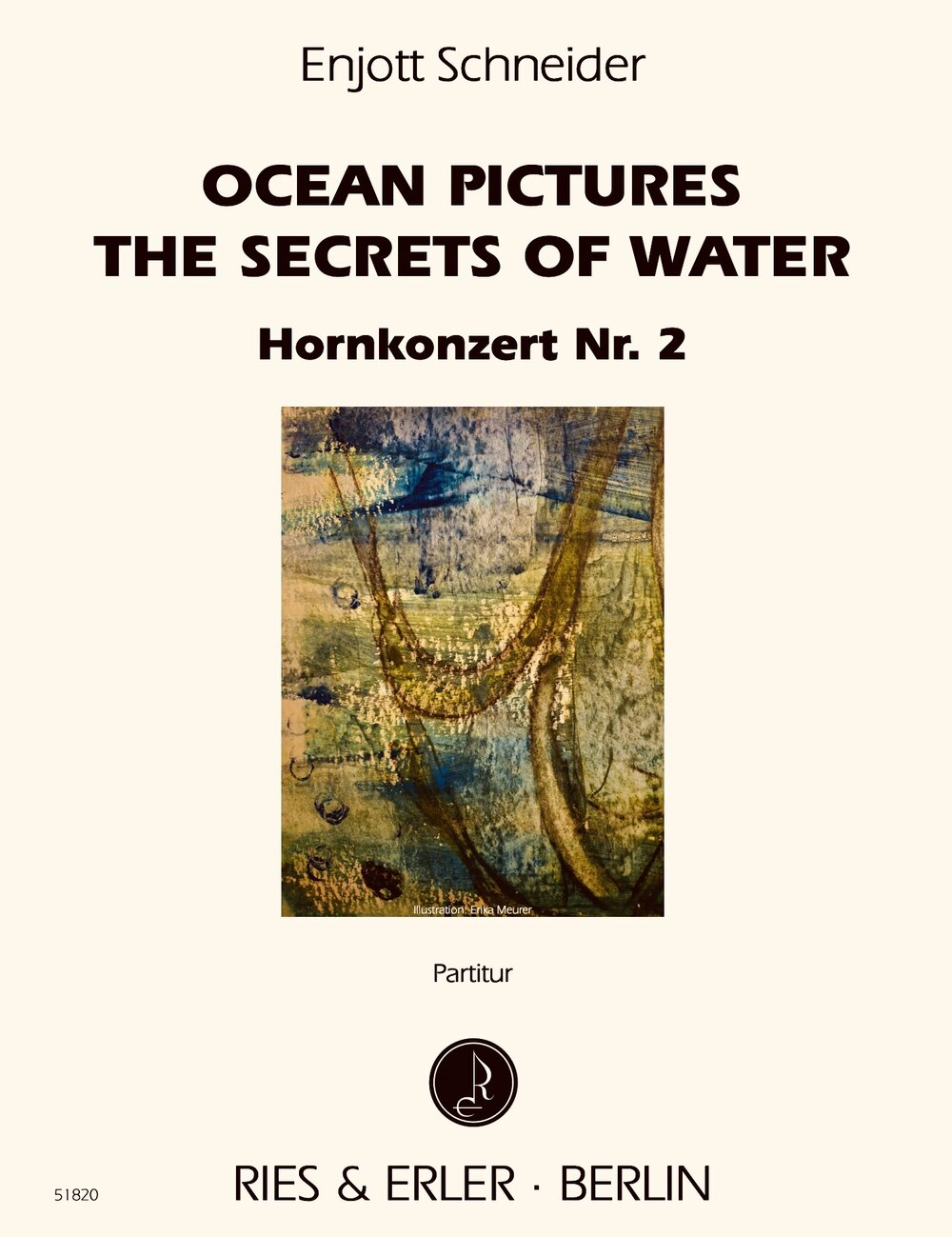
OCEAN PICTURES - THE SECRETS OF WATER
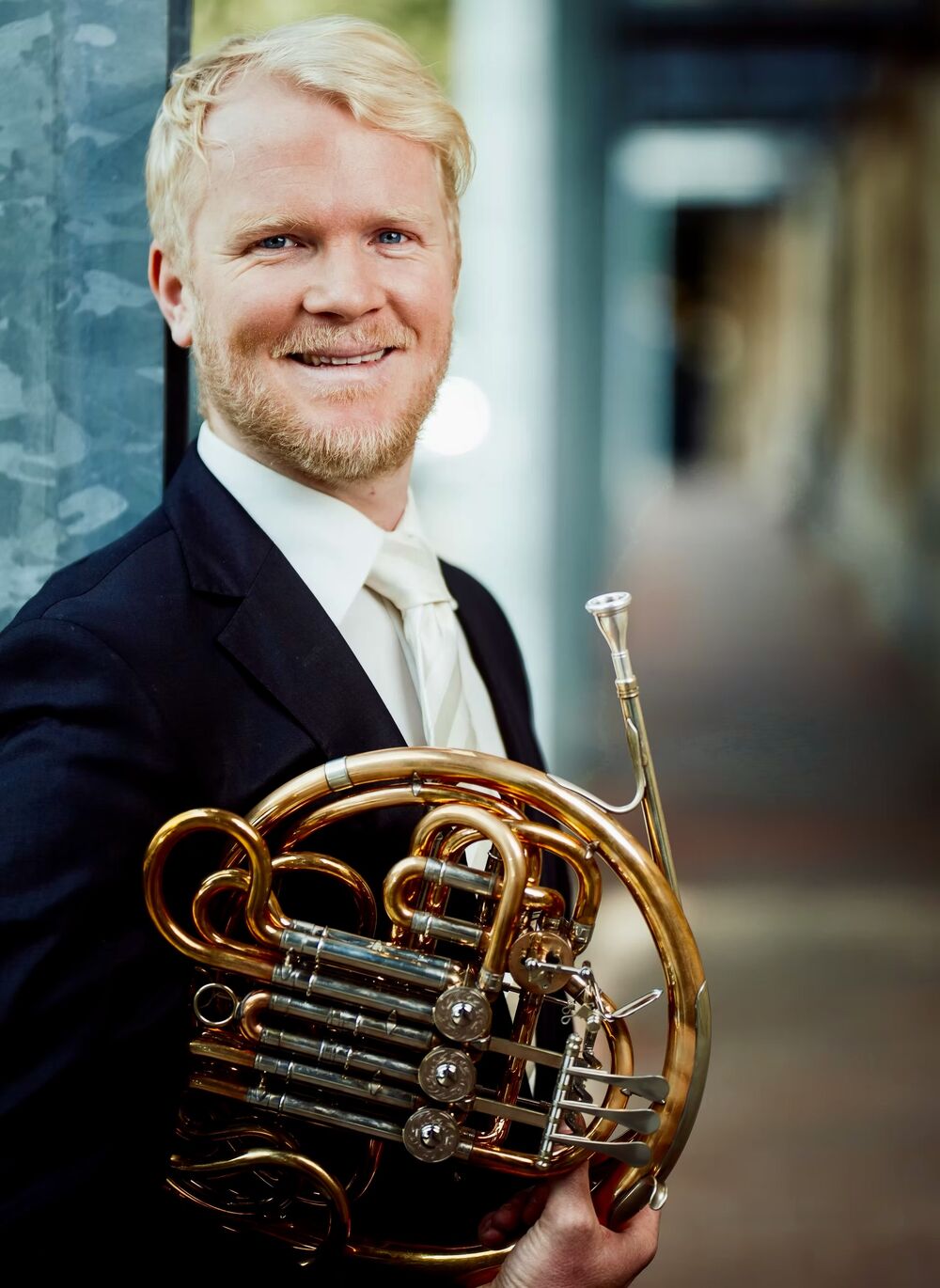
The solo horn is the absolute ‘star’ in this symphonic painting of boundless vastness, sublimity, silence and stupendous soundscapes.
Stylistically, it lies somewhere between postmodernism, sound research and the surrealism of recent film music. The focus is on extra-musical messages such as respect for creation and nature, ecological responsibility as a hymn-like call not to destroy the ocean-blue globe any further. Nationalism and egoism are countered by planetary coexistence as a necessary paradigm shift. These themes are to be conveyed above all by the solo horn, which is required to be technically virtuosic as well as melodically expressive.
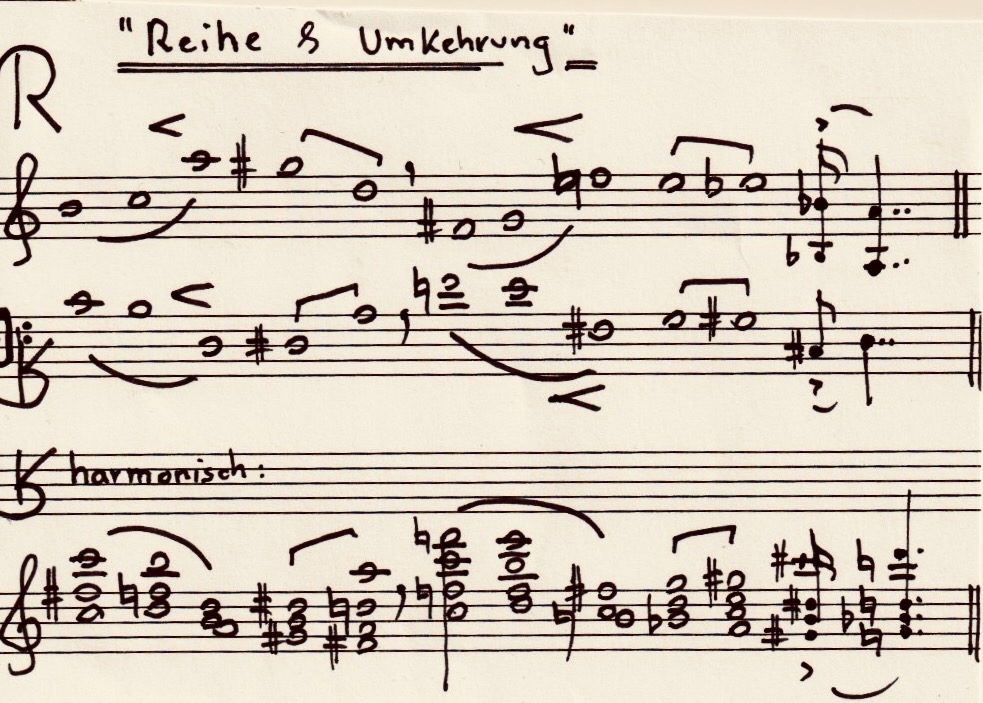
In order to centre the kaleidoscopic diversity of motifs and fragments, the composition is based on a recurring 12-tone row and its inversion.
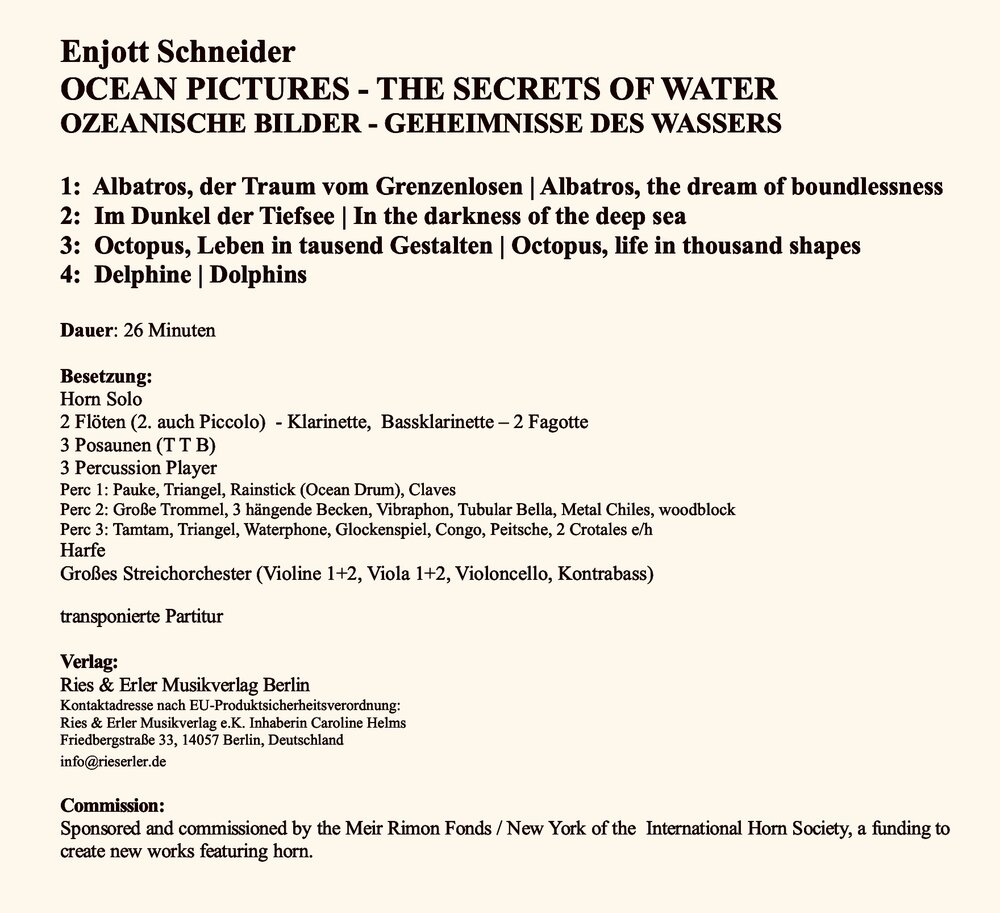
Movements: 1: Albatros, the dream of boundlessness
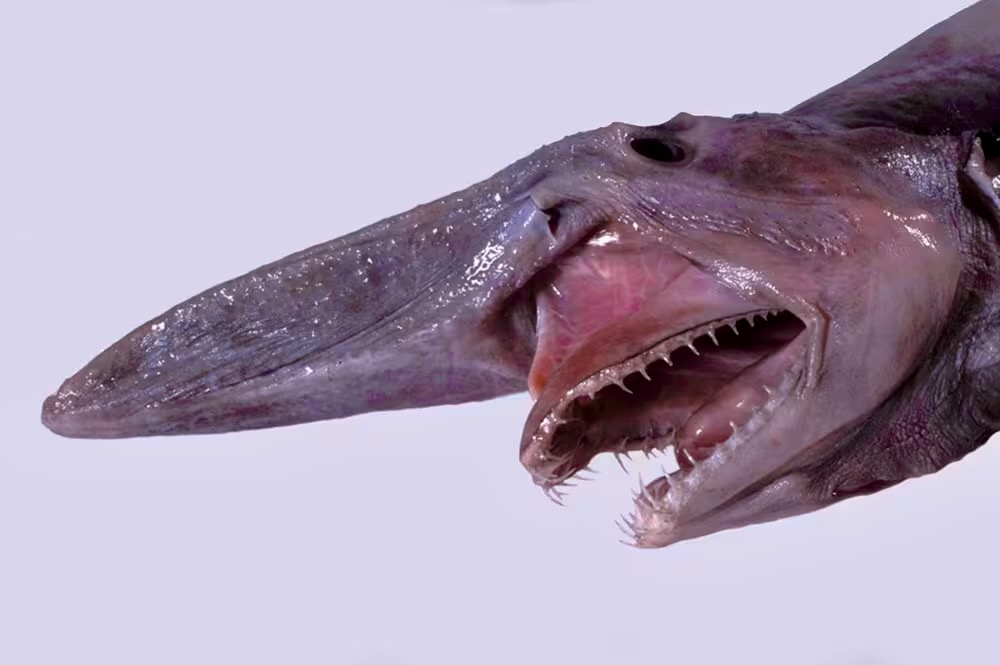
2: In the darkness oft he deep sea
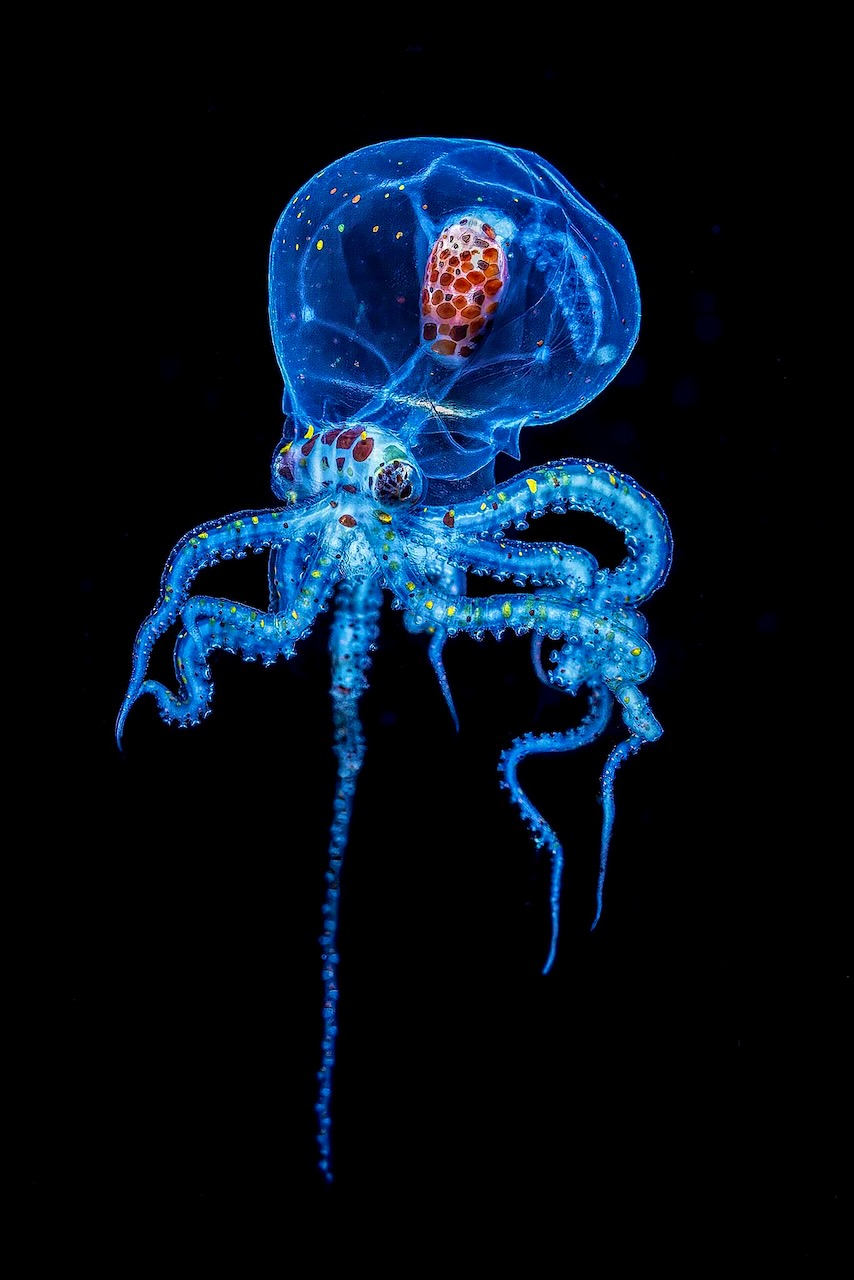
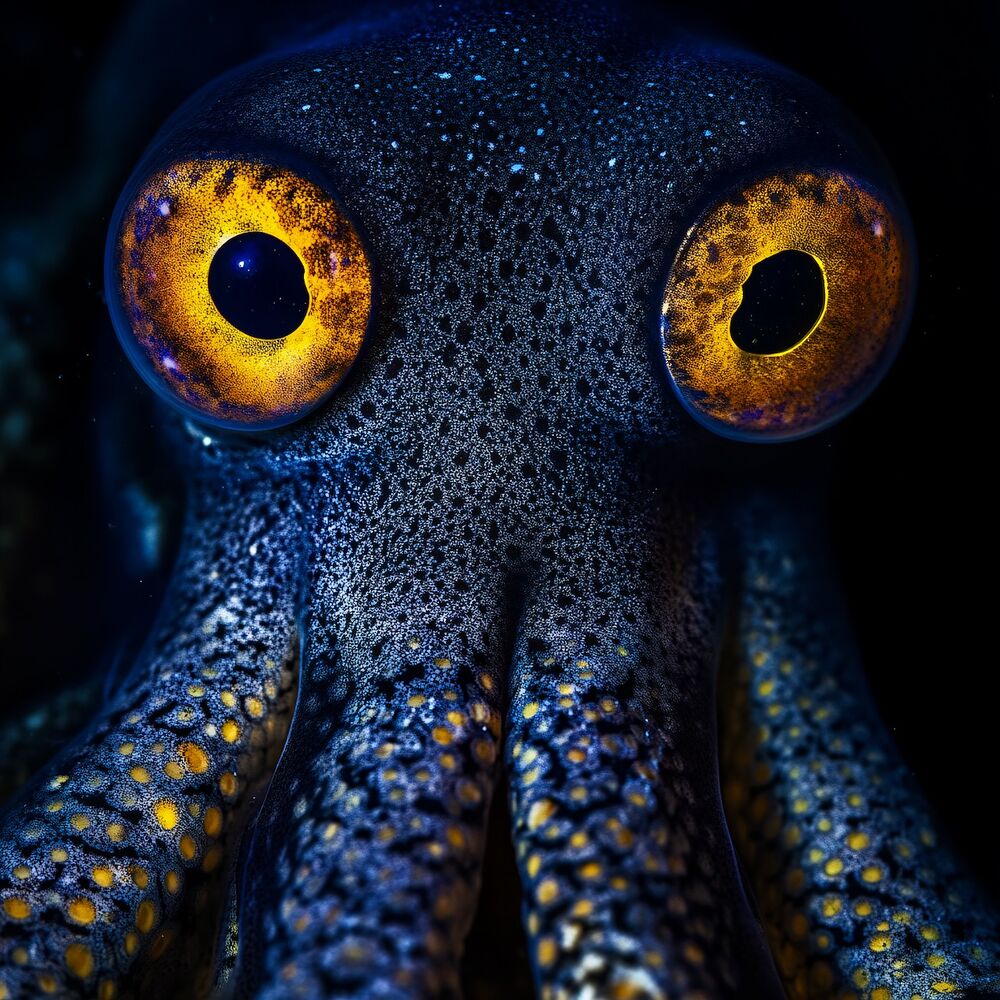
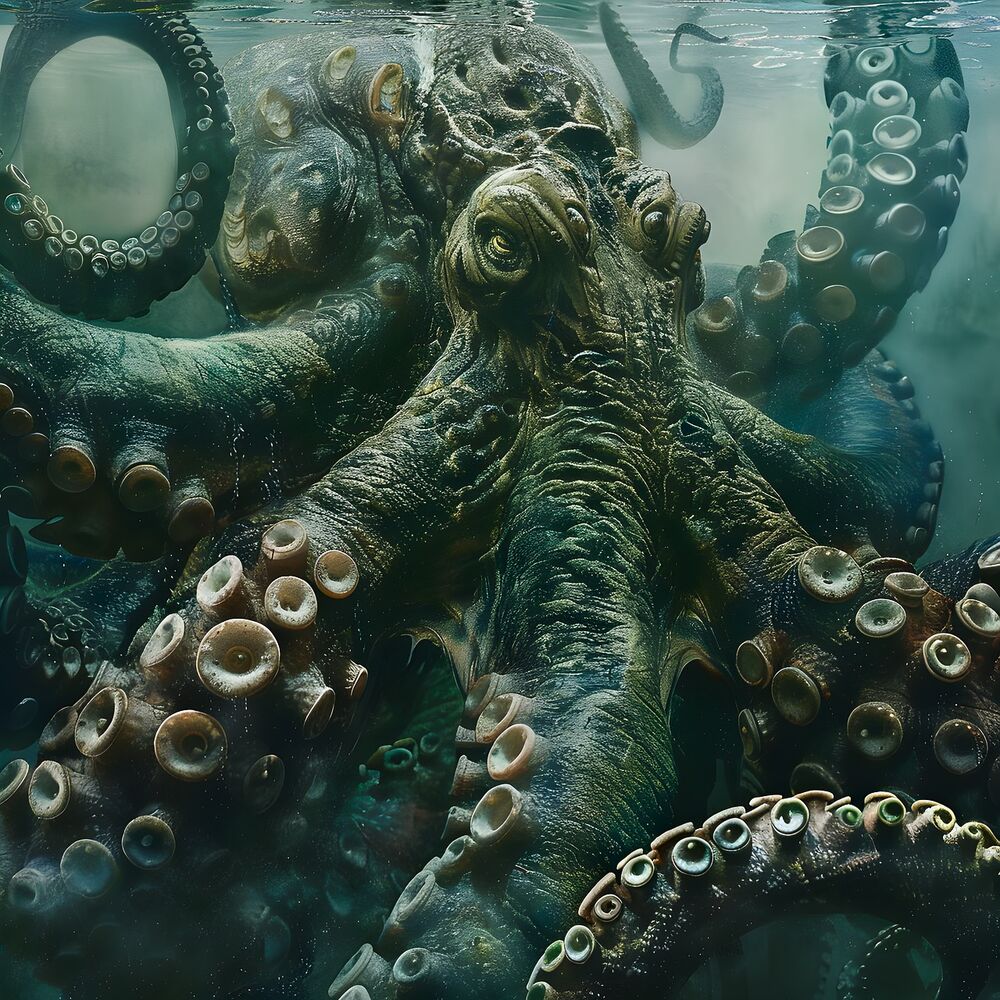
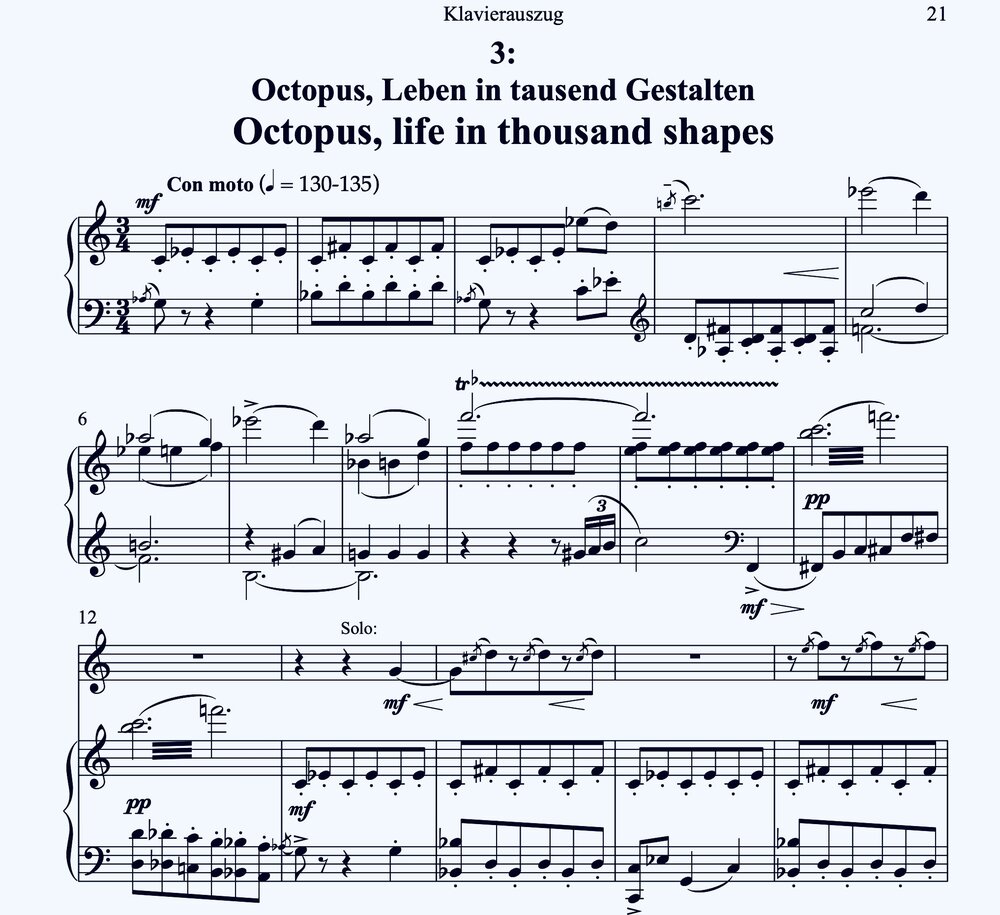
3: Octopus, life in thousand shapes
4: Dolphins
Duration: 26 Minutes
Publisher of notes/sheet music: Ries & Erler Musikverlag Berlin
, 2026
Instrumentation: Horn Solo
2 Flöten (2. auch Piccolo) - Klarinette, Bassklarinette – 2 Fagotte
3 Posaunen (T T B)
3 Percussion Players
Perc 1: Pauke, Triangel, Rainstick (Ocean Drum), Claves
Perc 2: Große Trommel, 3 hängende Becken, Vibraphon, Tubular Bella, Metal Chiles, woodblock
Perc 3: Tamtam, Triangel, Waterphone, Glockenspiel, Congo, Peitsche, 2 Crotales e/h
Harfe
Großes Streichorchester (Violine 1+2, Viola 1+2, Violoncello, Kontrabass)
Introduction: The solo horn is the absolute ‘star’ in this symphonic painting of boundless vastness, sublimity, silence and stupendous soundscapes.
Stylistically, it lies somewhere between postmodernism, sound research and the surrealism of recent film music. The focus is on extra-musical messages such as respect for creation and nature, ecological responsibility as a hymn-like call not to destroy the ocean-blue globe any further. Nationalism and egoism are countered by planetary coexistence as a necessary paradigm shift. These themes are to be conveyed above all by the solo horn, which is required to be technically virtuosic as well as melodically expressive.
In order to centre the kaleidoscopic diversity of motifs and fragments, the composition is based on a recurring 12-tone row and its inversion.
Comments on the four movements:
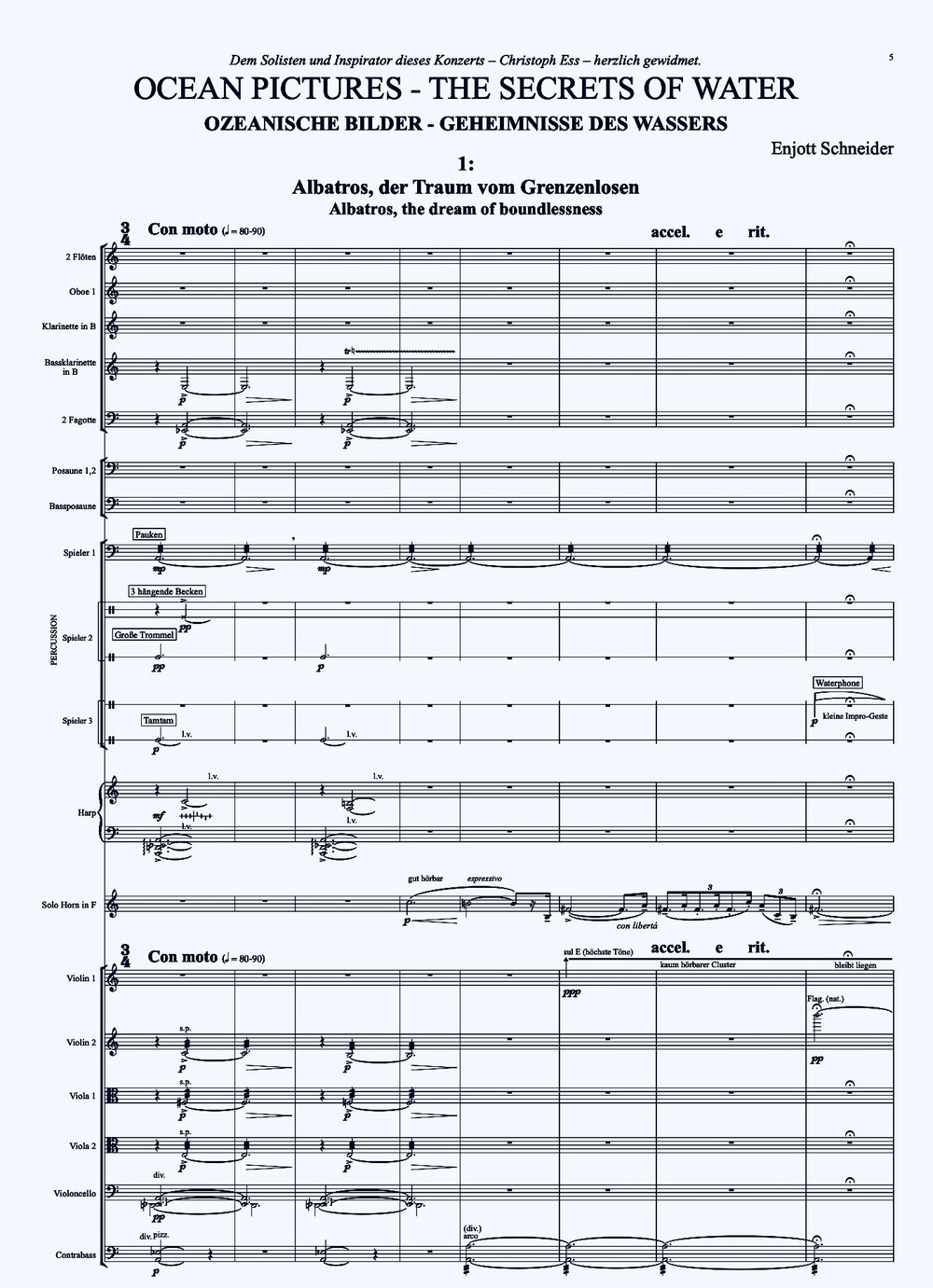
Moevement 1:
With a wingspan of 3.6 metres, the albatross is the leader among all birds, living for over 60 years, covering 4 million nautical miles in its lifetime and able to stay in the air for over 45 days. Because it can cover hundreds of kilometres without flapping its wings thanks to its dynamic gliding flight, and because it can cover extreme distances of up to 16,000 km without any effort, the albatross has been attributed with magical abilities. Historically, it is over 30 million years old and has been traceable in its true form as the species we know today for 28 million years (since the early Oligocene). It is a creature that can inspire humility and wonder in us “little” humans.
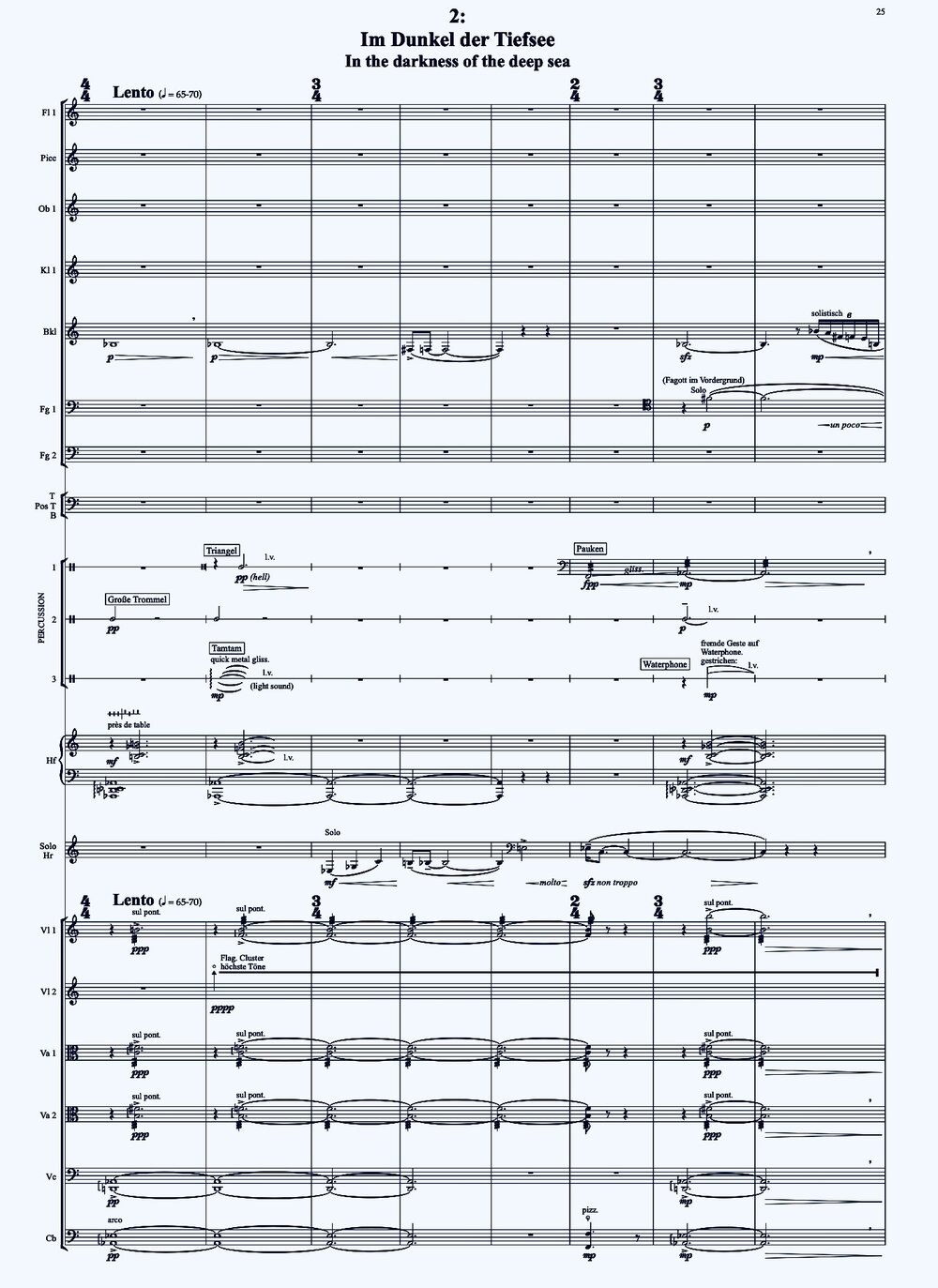
Movement 2: The darkness of the deep sea conceals creatures with surreal forms and behaviours that surpass even the most abstruse ideas of aliens and fantasy. This stimulates a sound fantasy that belongs entirely to “new music”, but which – conveyed narratively – retains a comprehensibility and beauty that is accessible to everyone.
Movement 3: In recent years, the octopus has gained an extremely positive image thanks to sensational research and observation: on the one hand, it is the most alien creature on the planet, yet with its fascinating intelligence (eight brains in each of its arms) and even emotional competence, it is quite close to humans. The music captures this complexity of octopus existence and integrates the soloist into a sensually confusing network with the orchestra.
Movement 4: The wondrous life of dolphins is also characterised by intelligence and, in addition, by a highly creative playfulness. They can plough through the sea at breakneck speed, performing all kinds of tricks. On the one hand, there is motoric pleasure and surprise; on the other, extermination and threats from overcivilised humans. With 80 million tonnes of plastic waste, industrial toxins and heavy metals alone every year, humans have not only turned the once oceanic paradise into a rubbish dump, but also into their own grave: epic cantilenas and requiem-like quiet passages therefore form a thoughtful contrast to vitality and powerful energy.
Dedication: Cordially dedicated to Christoph ESS, soloist and "Inspirator" of this composition
Additional remarks: Sponsored and commissioned by the Meir Rimon Fonds / New York of the International Horn Society, a funding to create new works featuring horn.