Category:
Organ / Sacred Music
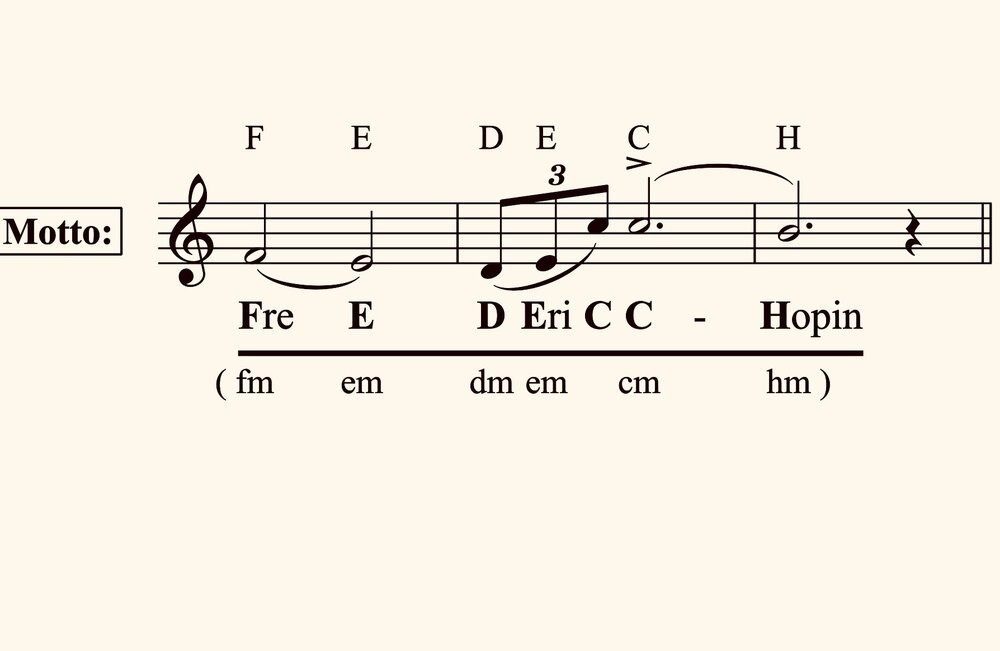
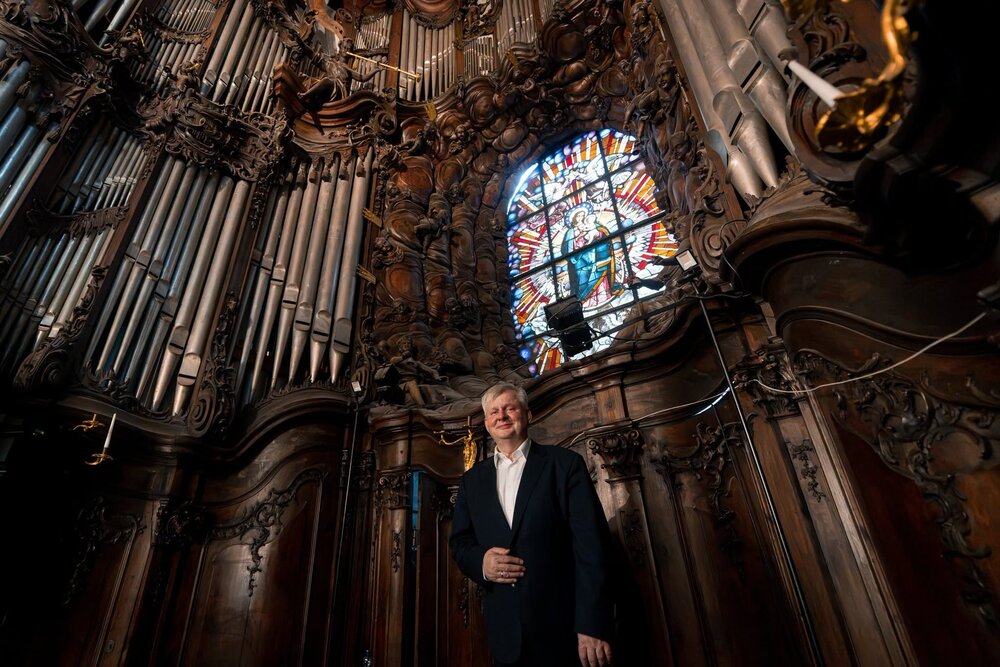
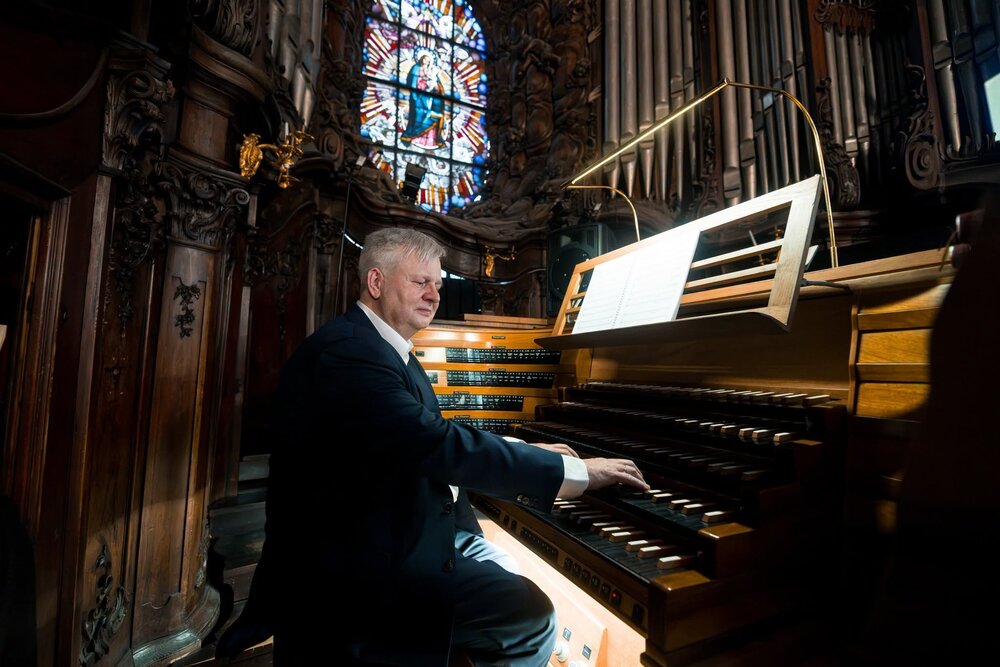
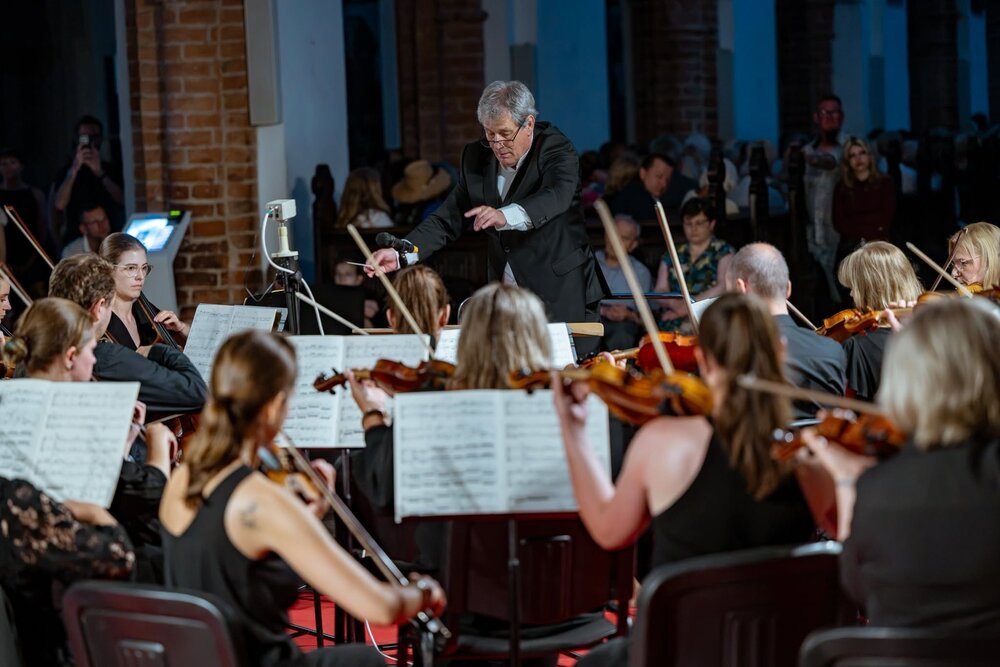
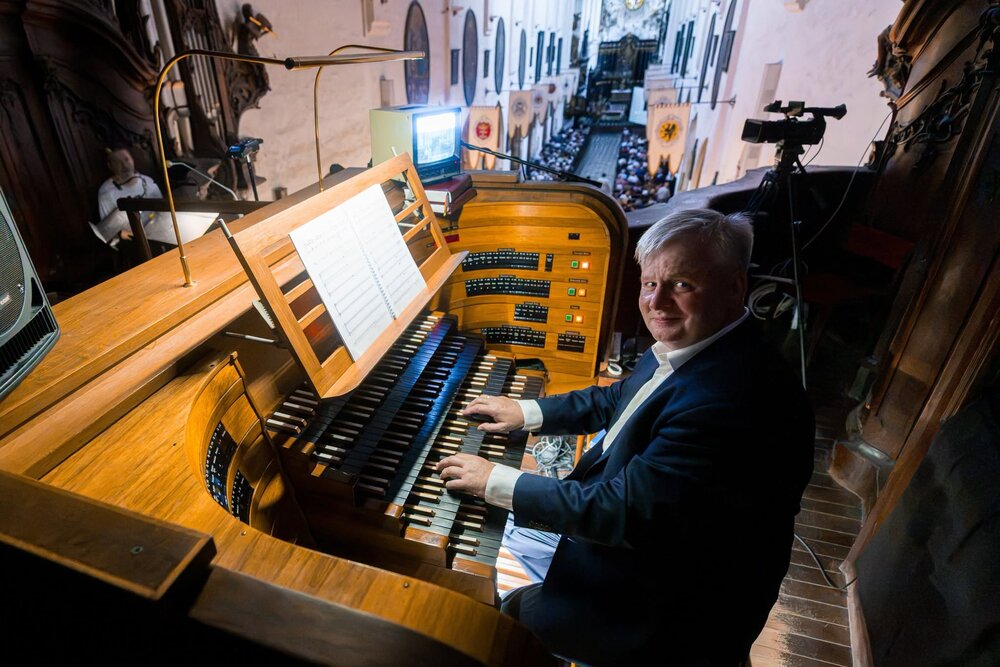
Das Orgelkonzert Nr. 3 CHOPINIADE ist ein Kompositionsauftrag für die Polnische Baltische Philharmonie "Frédéric Chopin" in Danzig zur Uraufführung bei den Internationalen Oliwa-Orgelfestspielen durch Prof. Roman Perucki, den Festivalleiter und Intendant der Baltischen Philharmonie. In vier Sätzen werden in Art eines Mosaik-Portäts Episoden und Stimmungen dieses hochverehrten Nationalkomponisten aneinandergereiht. Ein letztlich von unstillbarer Sehnsucht geprägtes Leben, das in der zweiten Lebenshälfte vornehmlich in Paris - fern der Heimat - sich ereignete. Hoch und Tief, Zuspruch und Einsamkeit sind die Kontraste dieser letztlich doch genialen Aussenseiter-Existenz. Ein aus den Notenbuchstaben des Namens "F E D E C C H" entwickeltes Leitmotiv verbindet alle Sätze, die jedoch öfters auch mit originalen Zitaten aus Chopin's Kompositionen durchsetzt sind und so eine sinnliche Nähe garantieren.
Movements: 1: SUCHEN NACH LEBENDIGKEIT
2: DIE FERNE GELIEBTE – LA CHIMÈRE DE LA VIE
3: KLÄNGE – „NICHT VON DIESER WELT“
4: APOTHÉOSE DU DÉSIR: LE PARADIS OU L’ENFER
Duration: 26 Minuten
Publisher of notes/sheet music: Strube Musikverlag München
, VS 3736
, 2026
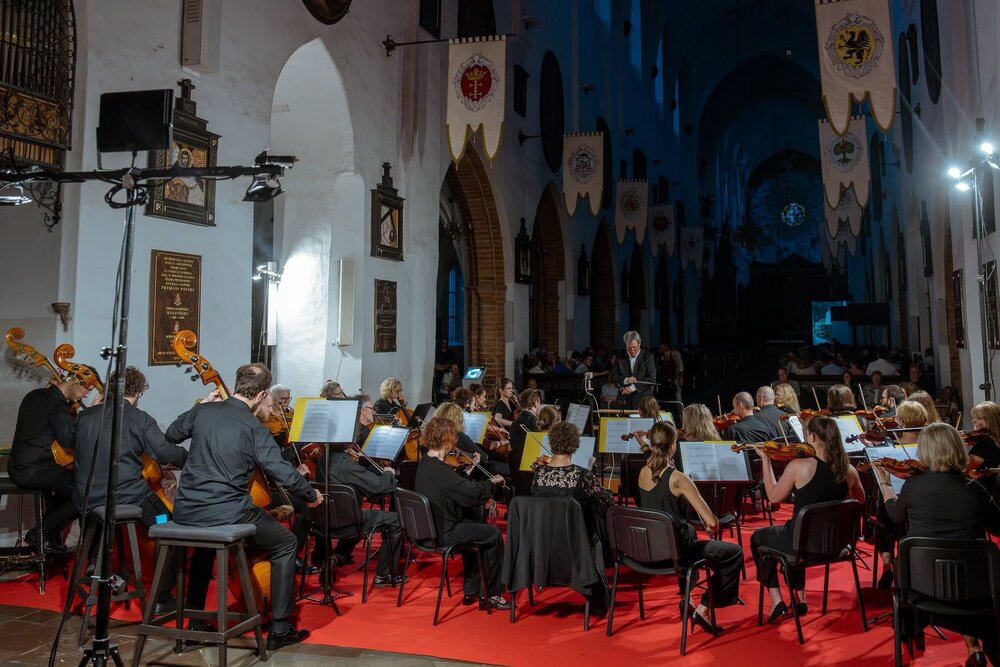
Instrumentation: Large Organ & String Orchestra (Vl 1-3, Vla 1,2, Vc 1,2, Db)( and three triangels with light sound ad libitum, performed by players of strung orchestra).
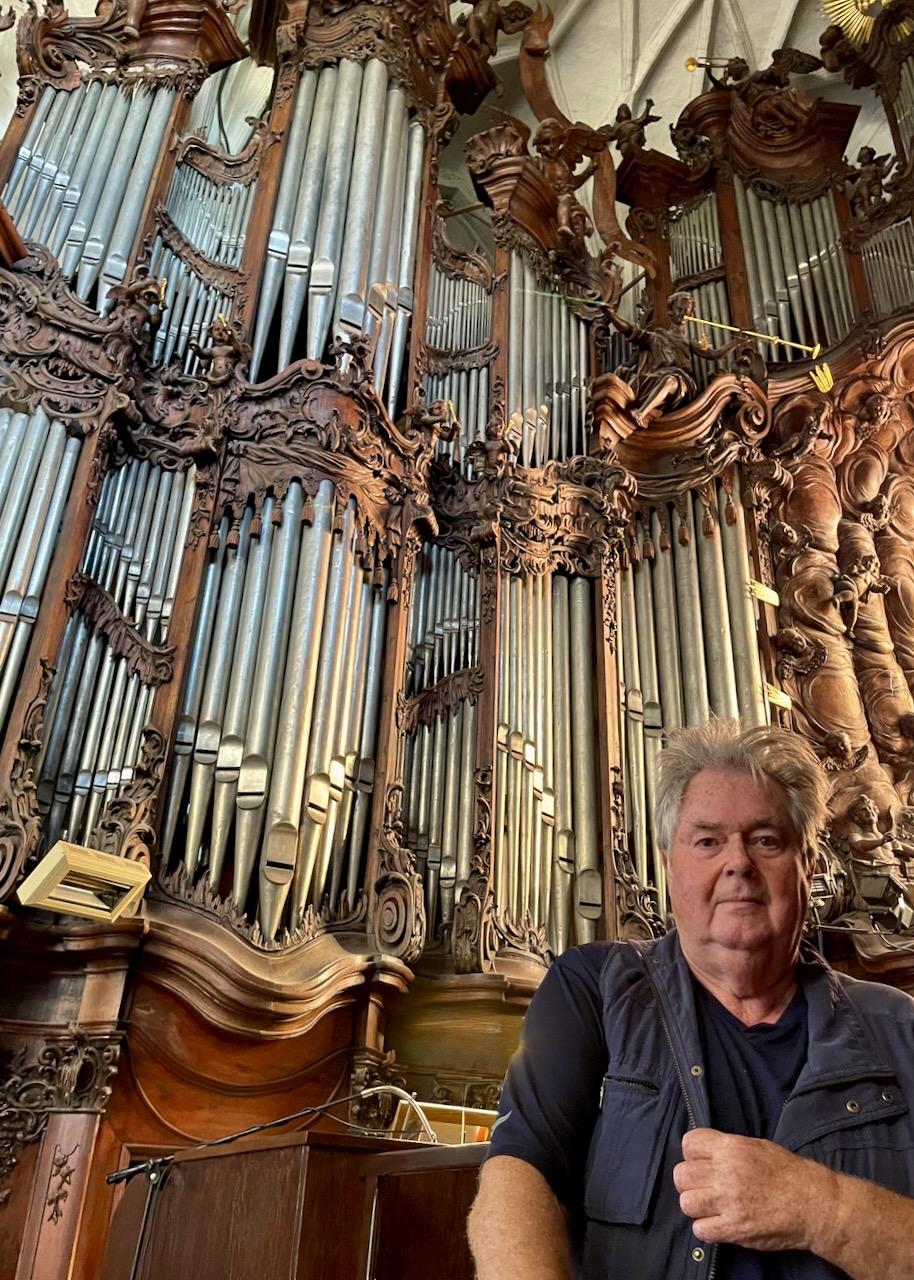
Introduction: Enjott Schneider: Essay on the organ concert CHOPINIADE
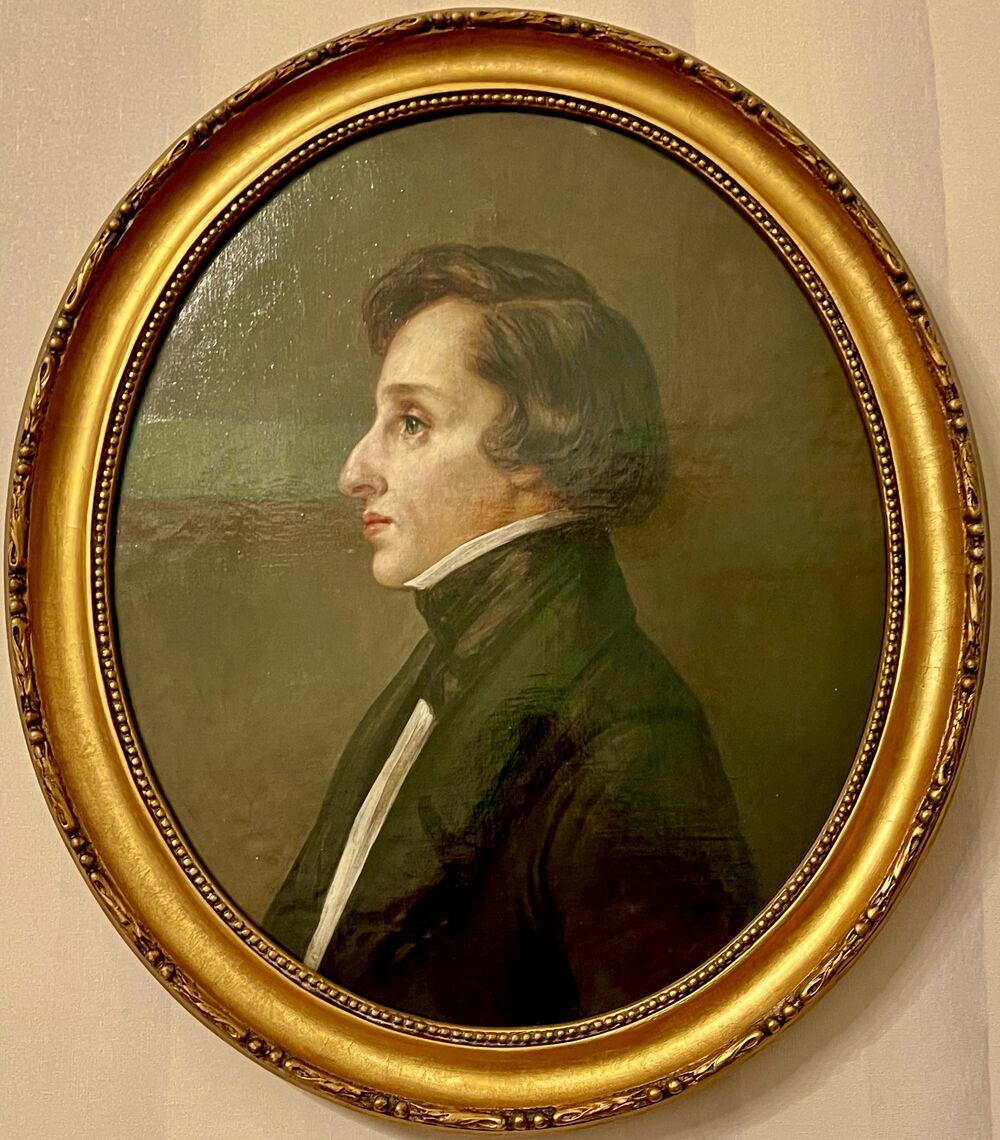
The life and work of Frédéric Chopin (1810–1849) are uniquely singular, full of cracks, breaks and contrasts. His fragile personality oscillated between an almost otherworldly existence in the aesthetic ‘pure’ worlds of poetry, dreams and artistic flights of fancy on the one hand, and earthly imprisonment by illness, delusions, depression, hardship and death on the other. Composing a ‘funeral march’ was his mission: ‘I feel sad, but that doesn't matter. If it were otherwise, my existence might be of no use to anyone’ (letter from 1841). Heinrich Heine, also a passionate admirer of Paris and a friend, summed up his surreal homelessness: ‘He is neither Pole nor Frenchman nor German; he betrays a far higher origin, he comes from the land of Mozart, Raphael, Goethe; his true homeland is the dream realm of poetry’ (1938). In the otherworldly dominance of his inner life, he was ultimately lonely, as Franz Liszt aptly remarked: ‘His feelings and impressions formed events for him that seemed more important to him than the vicissitudes of the outside world... Even his closest acquaintances did not penetrate the inner sanctum of his heart; he closed it off from all view.’
His childhood and youth in Poland were formative, especially his stays in the countryside, combined with a love of folk and dance music – probably as a counterpoint to the artificiality of the aristocratic and cultural spheres. He breathed in his Polish homeland, the carefree roughness of the waltz, mazurka, polonaise, oberek and the simple songs of his compatriots... only to then forget all sense of reality in the ‘beautiful’ world of aristocracy and Parisian salons: consumption and illness turned the man into a soul without a body. And consequently, waltzes and mazurkas also became incorporeal for him – feather-light dances of a lonely soul.
It is obvious that in such solitude, relationships with the female sex could hardly function: the unattainable ‘distant beloved’ was enough as a muse to give wings to the creative imagination. “Reality” was hardly envisaged here. ‘Longing’ became the leitmotif of an existence that became increasingly susceptible to depression and an unconscious search for suffering. At the age of twenty – already far away from his Polish homeland, which he would never see again – he wrote at midnight, alone in St. Stephen's Cathedral in Vienna: ‘Behind me graves, beneath me graves... only above me is there no grave!’ From then on, music became a cocoon for Chopin, in which he could survive all this.
NOTES ON THE FOUR MOVEMENTS:
The sound world of the organ concerto CHOPINIADE is determined by the romantic gesture of the many original quotations from Chopin, whose abundance, however, is contrasted with the centring element of a leitmotif and a special harmonic formula: the first two letters of the first name and surname resulted in a motif ‘F-E / C-H’ and a concise chord ostinato in F minor / E minor / C minor / B minor. The expressive values of “pain and suffering” of the two descending semitones and the colourfulness of the harmony in the range of a tritone “F – H” mark an unmistakable individuality: pain and colourful vitality as a contrast that has also become effective in the other musical parameters. Almost all quotations are based on the tonic ‘F’ or ‘E’, such as the two piano concertos No. 1 in E minor and No. 2 in F minor, composed when he was twenty years old.
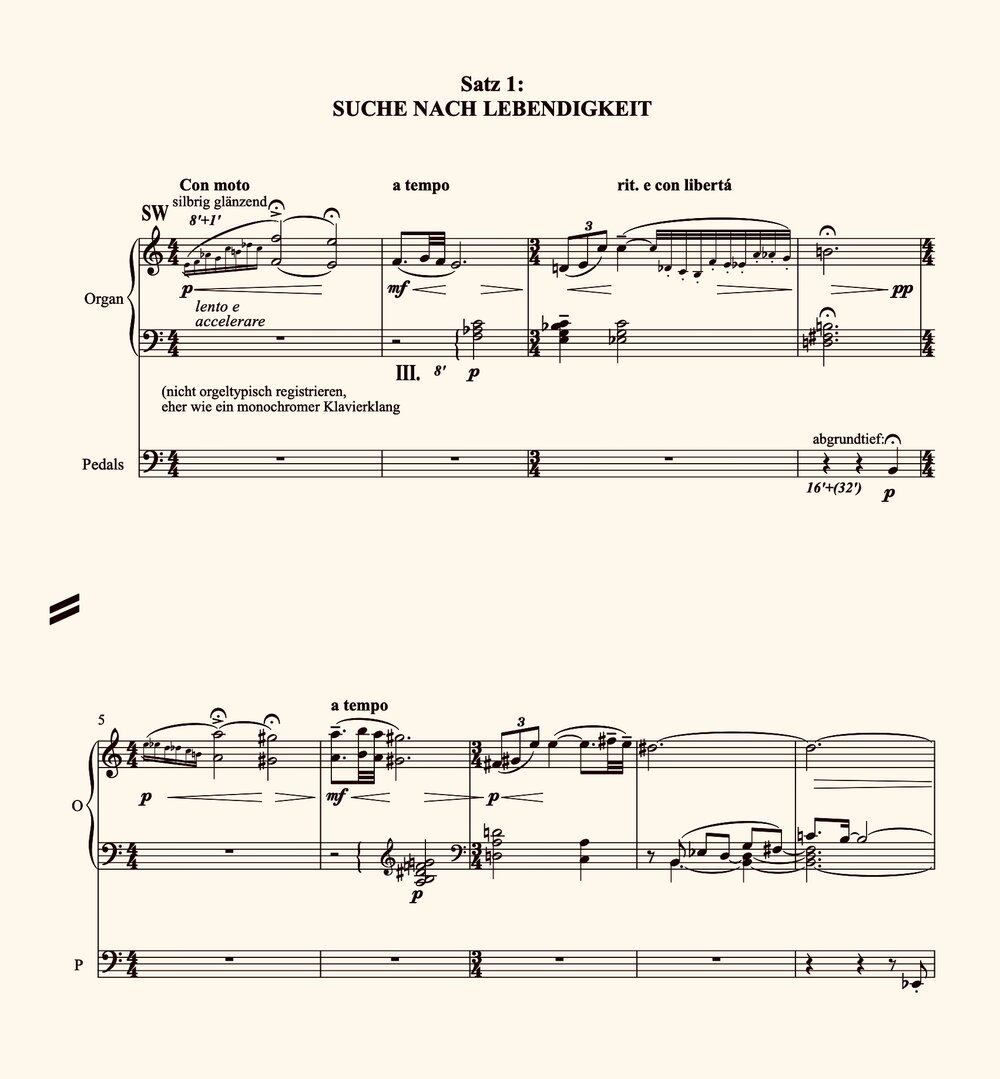
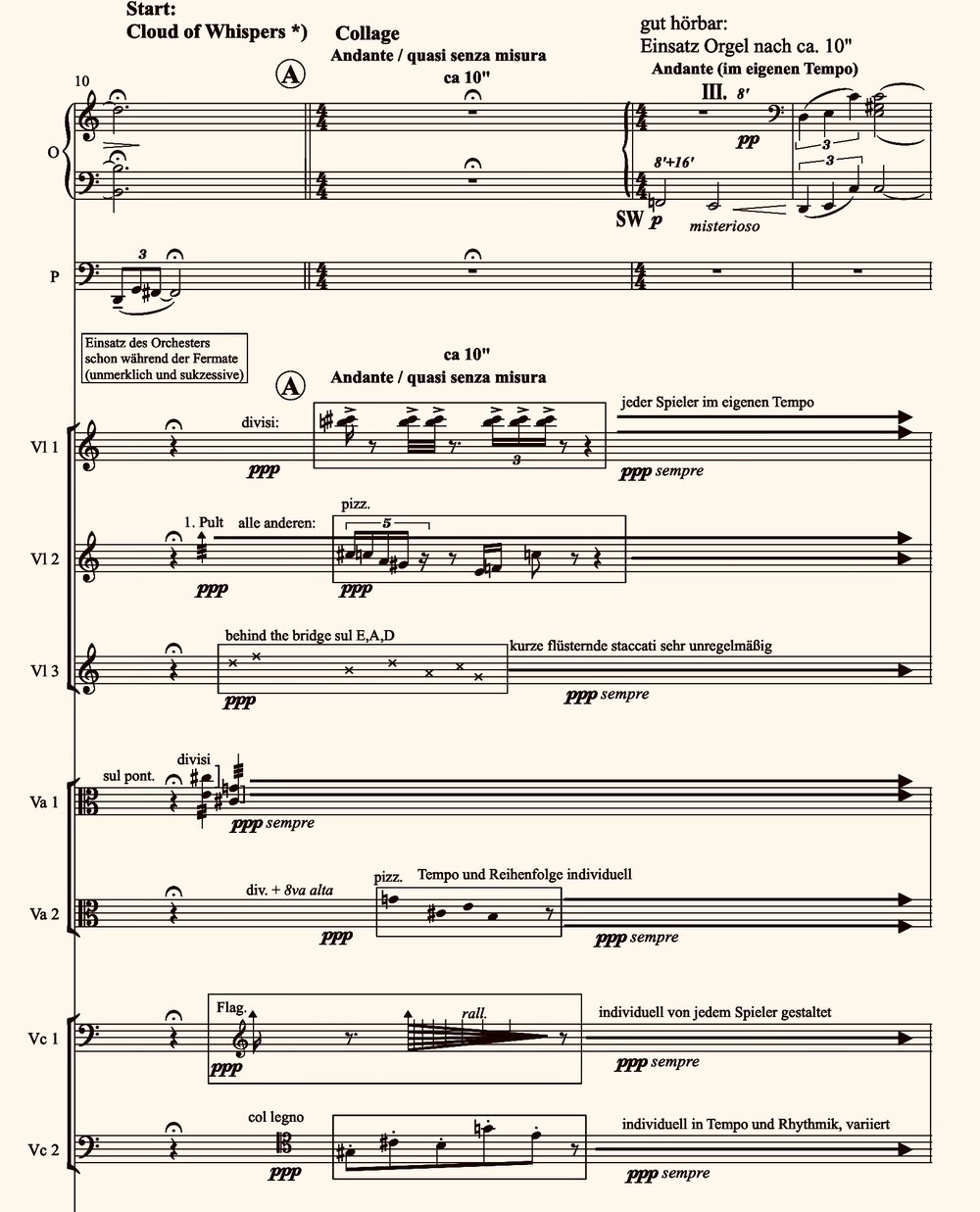
1: ‘SUCHEN NACH LEBENDIGKEIT’ (Searching for Vitality) establishes the leitmotif material as an agogic organ solo, then enters the fragile, mysterious world of a metrum-free ‘whispering cloud,’ from which the dark leitmotif and the bright fragments of the C sharp minor Waltz, Op. 64, No. 2, meet in a thrilling encounter. This mysterious search culminates in a loud quotation from the ‘Rondo à la Krakowiak in F major’ op. 14 for piano and orchestra, written when Chopin was just 18 years old, with its 2/4 time a vital reminiscence of country life and an expression of Polish national identity. Despite his French ancestry through his father, Chopin always clearly identified with his mother's Polish sense of home.
2: ‘THE DISTANT BELOVED – LA CHIMÈRE DE LA VIE’. The longing for love and recognition – especially from the female sex – seems to have been the driving force in the life of this highly romantic existence. The ‘beloved’ always had to remain distant, otherwise everyday realistic proximity would have brought the endless kiss of the muse to a halt. Konstancja Gladowska was the admired fellow student with whom he fell in love at the age of 16 at the conservatory and who, although she married in 1831, remained the ardently adored projection screen of his erotic aspirations. The ‘Romance’ from Piano Concerto No. 2 in E minor, quoted here in its original form, is – like many works of this period – an expression of this longing. Chopin's accompanying words: ‘It is a kind of romance, calm and melancholic... like a reverie on a moonlit spring night. That is why it is accompanied by muted violins.’ Chopin wore the ring of his ‘angel of peace’ on a chain hidden under his clothes, close to his heart, throughout his life. A second time in this movement, the central note ‘F’ is celebrated loudly, from whose fortissimo the waltz Op. 69,1 quietly emerges in the key of F minor: this refers to Maria Wodzinska, another ‘distant lover’ with whom he was formally engaged. His farewell to Maria in Dresden in 1835 inspired him to compose this gem of a melancholic “farewell” waltz. Two years later, he was forced to officially break off the engagement. Two years later, he had to comment on the official annulment of the engagement from afar with his desperately composed funeral march from the Sonata in B flat minor.
3: SOUNDS – “NOT OF THIS WORLD” refers to a remark made by Chopin at the age of twenty after his final concert on 22 March 1830 in his native Warsaw: “I did not improvise as I wished, for it would not have been of this world”. A mélange of the leitmotif line ‘F-E-C-H’ with the famous funeral march in B flat minor gives rise to the floating harmonies and unreal colour changes of the ‘Prélude in E minor, Op. 24’. This short work seems to me to be the essence of this composer, marked by incomprehensible highs and lows, who always remained distant from real life and whom a contemporary so aptly described as ‘a man without muscles, a disembodied genius’. I orchestrated the Nocturne Op. 55,1, which distils itself from ‘sounds not of this world’ – again in the symbolic F minor – in memory of my younger sister Valeska, who had just passed away and was buried the day after I wrote it.
4: APOTHÉOSE DU DÉSIR: LE PARADIS OU L’ENFER. The finale begins once again with a loud, but rather frenzied celebration of the central note “F”, followed by the abrupt juxtaposition of a “Valse burlesque” based on the leitmotif and poetic passages. Everything culminates in Piano Concerto No. 2 in F minor, which dates from his youth and whose finale, quoted here, is based on the ‘Kujawiak’, a regional variant of the mazurka. It is the wild flair of Poland's rural past, the longing for life. This creates space for itself – almost desperately – in a renewed quotation of the ‘Prélude in E minor’, not quietly and romantically, but in a demonically romantic arrangement over frenzied sixteenth notes in the strings. The organ concerto ends with a virtuoso, almost unbelievable chase: I was inspired by the seemingly absurd and almost unbelievable fact that Chopin's body is buried in Paris, but his heart – preserved in cognac – was allowed to travel to his Polish homeland, where it can still be venerated today as a famous relic, walled into a column in the Holy Cross Church in Warsaw. His sister Ludowika smuggled it across the border hidden under her skirt to fulfil Chopin's last wish: that his heart should remain in his beloved Poland.
CHOPIN AND THE SOUND OF THE ORGAN?
The elusive, floating and fleeting nature of the piano sound is characteristic of Chopin's music with its infinite richness of facets. The sound of the organ, which is far less capable of modulation, may seem almost contradictory to this. Nevertheless, the organ is interwoven with Chopin's life in many ways, which seems to me to justify this organ concerto, CHOPINIADE. Frédéric – then still Polish as Fryderyk – played the organ every Sunday at the age of 15 in the church of the monastic boarding school, full of pride, as a note from November 1825 shows: ‘I was the most important person in the whole Lyceum after the Reverend, the priest.’ He also possessed a solid pedal technique and improvised on the organ during school and convent visits. Later still – in case his professional aspirations did not work out – he offered a friend the opportunity to work as an organist in his village. And on 24 April 1839 – having just returned from Mallorca after a legendary stay with his partner George Sand – he played the organ at the funeral service for the tenor Adolphe Nourrit. It is said that he played Franz Schubert's ‘Die Gestirne’ (The Stars) ‘with gentle registers’ during communion. The interpretation of his ‘Raindrop Prelude’, composed in Mallorca and inspired by delusions, is also documented.
– With the CHOPINIADE organ concert, we can discover connections to Frédéric Chopin that have hardly been explored before.
Dedication: Cordially dedicated to my friend Roman Perucki
Additional remarks: Cordially dedicated to my friend Roman Perucki
World premiere:
29.06.2026
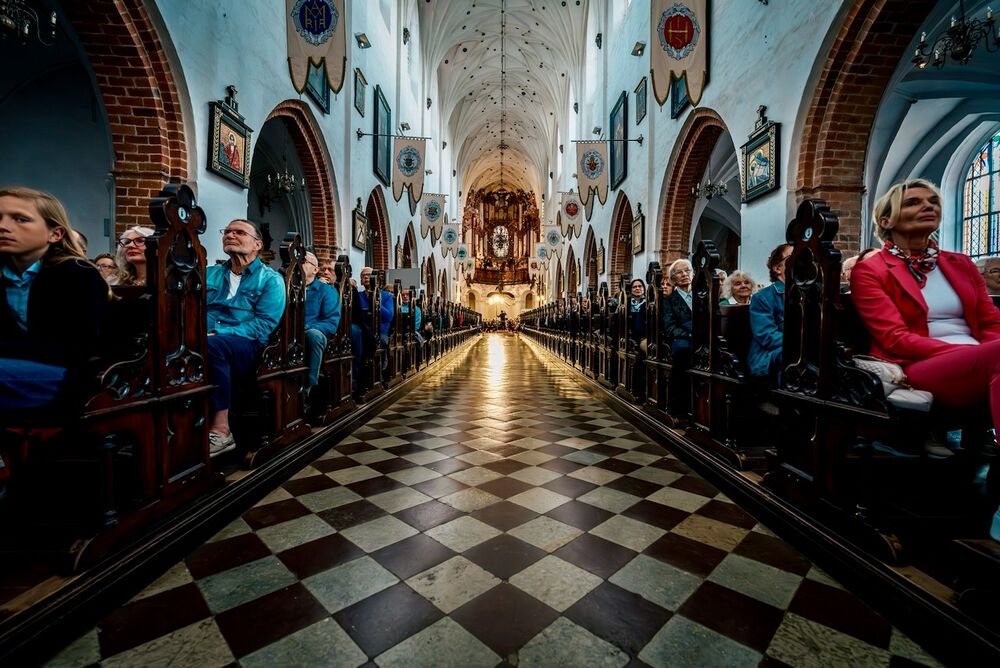
, Kathedrale Oliwa / Gdańsk in Polen
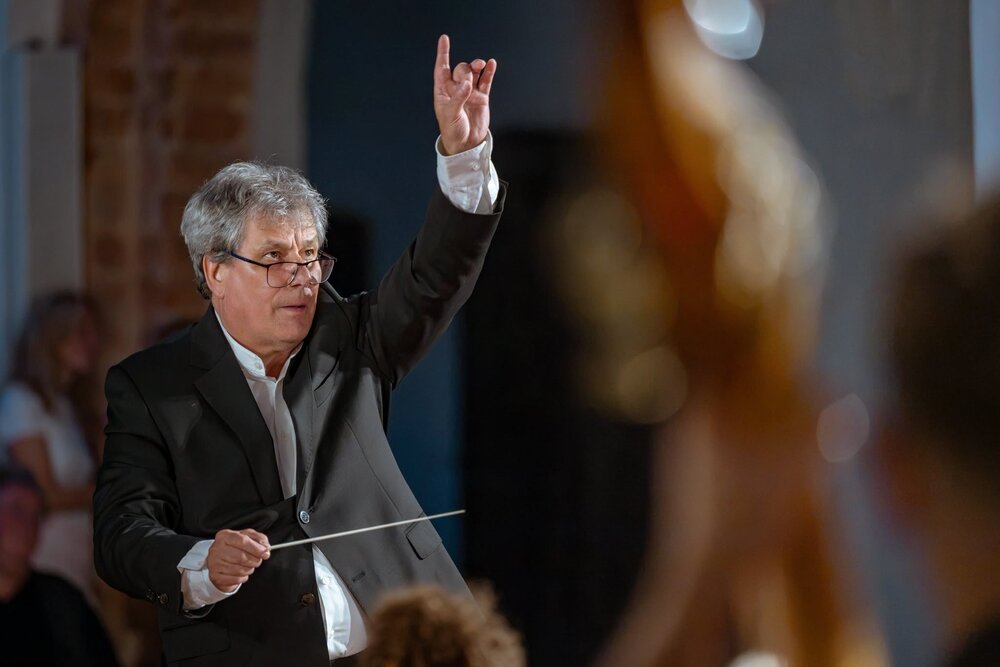
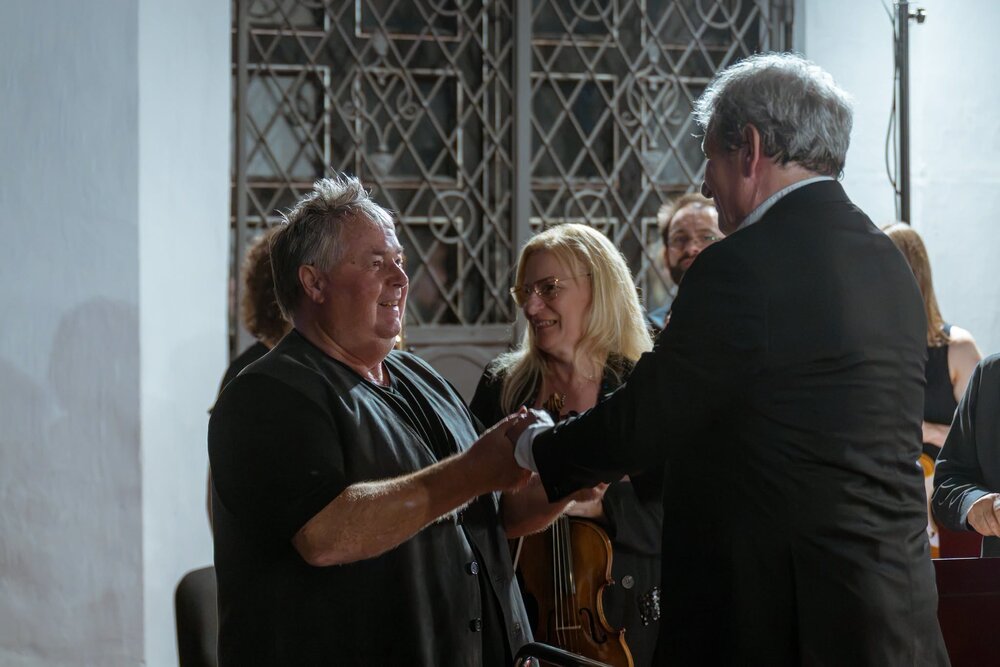
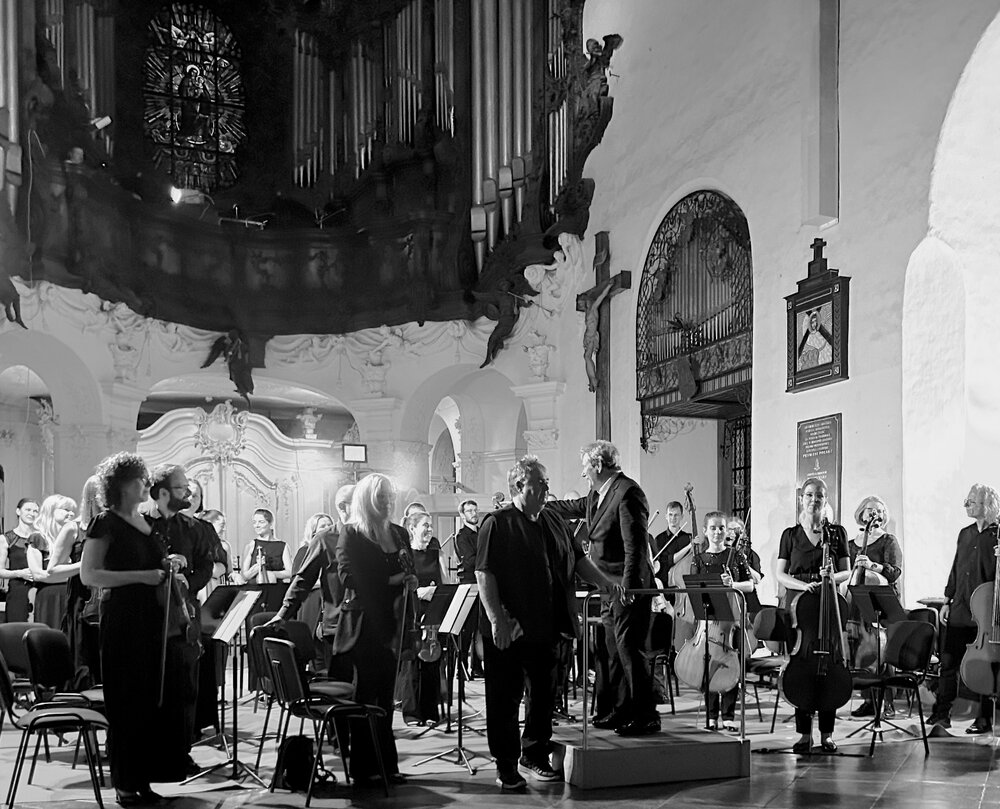
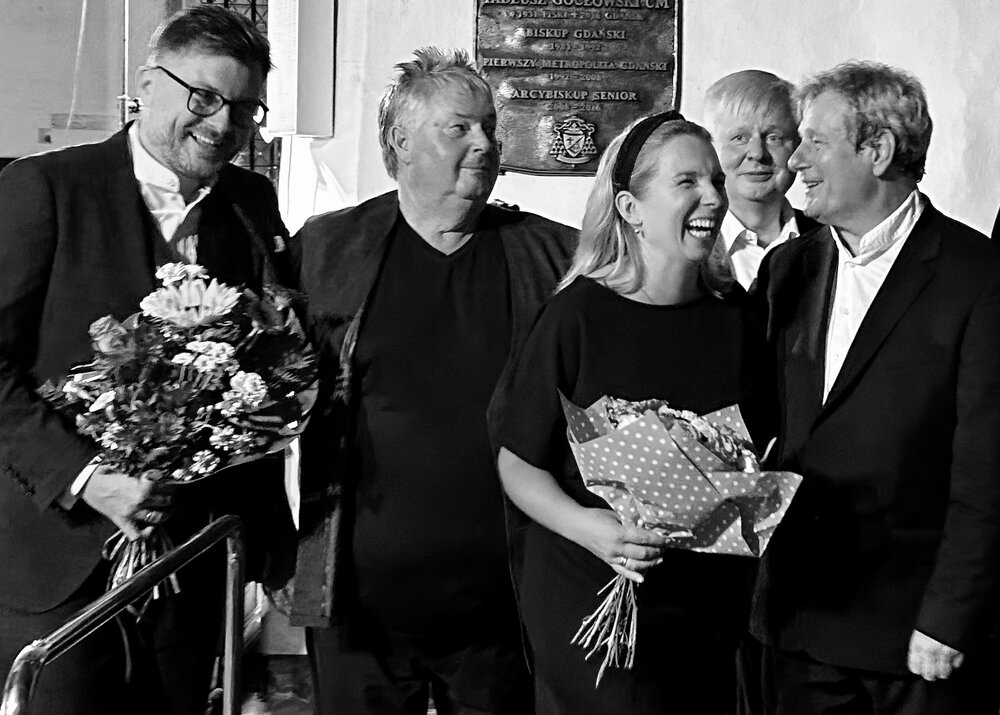
Performers at world premiere: 30. Juni 2026 in Basilika Oliwa (Gdansk, Polen) mit Roman Perucki und der Polska Filharmonia Baltycka im. Fryderyka Chopina (Baltische Philharmonie)