
Enjott – a graduate Doctor of Philosophy and from 1979 to 2012 holder of a professorial chair at the
Munich University of Music and Theatre – has also written a number of books and essays.
In the 1970s and 80s these were mostly on musicological topics, later shifting towards broader cultural and aesthetic questions.
His widely acclaimed handbooks on film music
(Film Music handbook I and
Film Music handbook II)
have become standard reference works. In 2020, Allitera Verlag published, as volume 66 of the series "Komponisten in Bayern"
(ed. by Theresa Henkel and Franzpeter Messmer) a
Monographie ENJOTT SCHNEIDER.
With "The Art of Sharing. Time - Rhythm - Count" (Piper Verlag, 1991) he produced a wide-ranging work of cultural philosophy, exploring time, rhythm and number as archetypal categories underlying music, nature and human culture.
-
Künstliche Intelligenz im Kreativprozess, in VIRTUOS GEMA-Magazin
KÜNSTLICHE INTELLIGENZ IM KREATIVPROZESS - Chance oder No-Go?, Im Schwerpunkt der 3. Ausgabe des GEMA-Magazins 2023, S. 18 -
Film und Beethovens AURA
Enjott Schneider, VOM FILM AN SICH UND BEETHOVENS "AURA", in: Beethoven im Film. Titan auf Tonspur und Leinwand. hg.v. Albrecht Riethmüller, edition text+kritik, im R. Boorberg-Verlag, München 2022 -
Enjott Schneider: Das große Geschenk ein WIR erleben zu dürfen, in AVISO
Enjott Schneider: Das große Geschenk ein WIR erleben zu dürfen, Ein Gespräch von Carsten Gerhard mit dem Komponisten Enjott Schneider, in AVISO Magazin für Kunst und Wissenschaft in Bayern, hg. vom Staatsministerium Kunst und Wissenschaft 2/2021 S. 24-29 -
Monographie ENJOTT SCHNEIDER, Band 66 der Reihe "Komponisten in Bayern"
Anläßlich des 70. Geburtstages gab es als Buch eine ausführliche Monographie ENJOTT SCHNEIDER als Band 66 der Reihe "Komponisten in Bayern" - Dokumente musikalischen Schaffens im 20. und 21. Jahrhundert, hg.v. Theresa Henkel und Franzpeter Messmer, mit Buchbeiträgen von Franzpeter Messmer, Jürgen Geiger, Antje Müller, Enjott Schneider, Kay Westermann, Dorothea Hofmann, Charlotte Seither, Matthias Keller, Johannes X. Schachtner und Andreas Weidinger. Enthalten auch eine Chronik, eine Fotostrecke und ein Werkverzeichnis -
KUNST UND KÜNSTLICHE INTELLIGENZ in com.POSITION des dKV
KUNST UND KÜNSTLICHE INTELLIGENZ?, eine Stellungnahme für "meinungsbarometer.info", im Magazin com.POSITION des DKV Deutscher KomponistinInnen-Verband, 1. Ausgabe 2019, S. 9+10 -
BAHNWÄRTER THIEL als Oper. Ein Werkstattbericht
BAHNWÄRTER THIEL als Oper. Ein Werkstattbericht, in: "...und weiche Klänge quellen auf wie Rauch". GERHART HAUPTMANN UND DIE MUSIK, hg. von W. de Bruyn und S. Rohlfs, Schriften des Gerhart-Hauptmann-Museums 3, Quintus-Verlag Berlin 2017 -
IMPROVISATION ERDET KOMPOSITORISCHE FLÜGE
IMPROVISATION ERDET KOMPOSITORISCHE FLÜGE, im Gespräch mit Enjott Schneider, in: Anke Steinbeck (HRSG.), FANTASIEREN NACH BEETHOVEN. Praxis und Geschichte kreativer Musik, S. 79-89, Verlag Christoph Dohr Köln 2017 -
NEUE ORCHESTERMUSIK IN CHINA
NEUE ORCHESTERMUSIK IN CHINA. Ein persönlicher Kommentar von Enjott Schneider, in: DAS ORCHESTER, S. 32-36 November 2015 -
About the future of broadcasting and television
About the future of broadcasting and television, in: INFORMATION of the German Composers' Association No. 87 01/2014 44. Jg., S. 6-10 -
Hovering of the poet
Essay HOVERING OF THE POET. THE COMPOSING OF SONGS OF ROBERT M. HELMSCHROTT, in the book: COMPOSERS IN BAVARIA volume 55: Robert M. Helmschrott, Hans Schneider-Verlag Tutzing 2013 ISBN 978 3 86296 061 3, see pages 283-292 -
Film music - dream work in a surreal world
Enjott Schneider: Film music- dream work in a surreal world. A personal report from the composers' workshop, published in: The soundtrack of our dreams - film music and psychoanalysis, ed. by Konrad Heiland and Theo Piegler, Psychosozialverlag (psychosozial publisher), ISBN 978-3-8379-2295-0. -
Music visually
MUSIC VISUALLY in: INFORMATION of the German Composers' Association, volume 43 No. 85, Issue 1, Berlin 2013, pp. 18-20 -
INTELLECTUAL PROPERTY
"Intellectual Property" as a symbol of liberation movement, in: INFORMATION of the German Composers' Association, volume 42 No. 84, Issue 2, Berlin 2012, pp. 7-9 -
Crescendo interview
Issue 2/August/September of CRESCENDO, interview with Enjott Schneider: SOUNDTRACK- WHY NOT?, pp. 58-59 -
This is nonsense!
"This is nonsense!"Enjott Schneider about movie and e-composers (p. 34 and 35) as well as "wind instruments in soundtracks" (pp. 24-26). Two essays in CLARINO. Magazine for Wind Music, July/August 2012 -
Feuilleton report in the Sueddeutsche Zeitung
Feuilleton of the daily newspaper Sueddeutschen Zeitung from July 13, 2012, by Helmut Mauró: THE WONDERFUL JOURNEY TO THE HEART OF SOUND -
GEMA virtuoso interview
WORKING TOGETHER AGAIN, GEMA virtuoso, Issue June 2012, p.29, interview with Enjott Schneider, Chairman of the Board (GEMA = Society for musical performing and mechanical reproduction rights) -
What to do when copying reduces the value of creativity
Neue Musikzeitung (new music journal) May 2012 with the big interview: "What to do when copying reduces the value of creativity", p. 23 -
LÄRMENDE KULISSE, Interview mit Enjott Schneider
LÄRMENDE KULISSE, Interview mit Enjott Schneider, in: FILM & TV - KAMERAMANN. Produktion und Postproduktion S. 62+63 Heft 7/2010 -
Story telling with sounds and pictures
Story telling with sounds and pictures. Film music - DENOMINATION, edited by Béatrice Ottersbach and Thomas Schadt, UVK Publishing association, Konstanz 2009, ISBN 978-3-86764-193-7 -
Schnitt
"Time Structures of Film Music" appeared in SCHNITT Magazine. Film Magazine #56/04.2009, p. 20-24 -
Telling stories with sounds and pictures
TELLING STORIES WITH SOUNDS AND PICTURES. Appeared in FILMMUSIK-BEKENNTNISSE, edited by Béatrice Ottersbach and Thomas Schadt, UVK-publishing company Konstanz 2009, ISBN 978-3-86764-193-7 -
"INSIGHT INTO THE INVISIBLE. A workshop talk with Enjott Schneider about film music"
"INSIGHT INTO THE INVISIBLE. A workshop talk with Enjott Schneider about film music". Appeared in Munitionsfabrik 19 - If Today was Tomorrow. Signature of Time -, the University of arts and Design Karlsruhe magazine, 2008 p. 98-101 -
Every situation makes me curious
"Every situation makes me curious", appeared in "Weiler Zeitung" magazine on 8.12.2007 (Mirko Bähr) -
He just wanted to write an opera and now his music is travelling around the world
"He just wanted to write an opera and now his music is travelling around the world", appeared in Badische Zeitung (newspaper) on 15.12.2007 (Monika Merstetter) -
Make music with bold sound aids. An interview with the composer Enjott Schneider at the Dresden Film Festival
"Make music with bold sound aids. An interview with the composer Enjott Schnieder at the Dresden Film Festival" by Máté Baksa-Soos, appeared in "Aüslöser", the Sachsen film alliance newspaper, 2007/3, p. 13-15 -
Schneider, Enjott
"Schneider, Enjott" by Dorothea Hofmann, appeared in MGG (Music in history and the present), by Dr. Dorothea Hofmann, volume 14, 2005, Bärenreiter & Metzler punlishers, Spalten 1504-1506 „Schneider, Enjott“ von Dorothea Hofmann. In: MGG (Musik in Geschichte und Gegenwart), von Dr.Dorothea Hofmann, erschienen 2005, Band 14, Bärenreiter & Metzler-Verlag, Spalten 1504-1506 -
Ali and the Enchanted Jug
Karlheinz Böhm and Enjott Schneider: ALI AND THE ENCHANTED JUG. A Musical fairytale from Ethiopa, with images by Brigitte Smith, with a CD, released by Schott-Verlag publishing, Mainz 2005 ED 9773 ISBN 3-7957-0509-6 -
Church Music - An art form for is dying?
"Church Music - An art form is dying?, appeared in GEMA - Headlines, November 2005 (172 Edition), p. 16-21, ISSN 0946-0055 -
"Ethno"
"Ethno" a stylistic device of film music after 1990, appeared in complexity in the 20th century. Composers in the field of the elite-popular, edited by Walter Salmen and Giselher Schubert, = Frankfurt Studies volume 10, Schott publishers 2005, ISBN 3-7957-0116-3, p. 367-376 -
Wind Instruments in Film Music
"Wind Instruments in Film Music": appeared in Clarino-Print. Bläsermusik International booklet 3/2005, p.36-40 -
The unbelievable will be real. Wind instruments in the film recording studio
"The unbelievable will be real. Wind instruments in the film recording studio":appeared in Clarino-Print. Bläsermusik International booklet 9/2005, p. 48. -
Not of this world. Wind instruments in the film recording studio
"Not of this world. Wind instruments in the film recording studio":appeared in Clarino-Print. Bläsermusik International Booklet 10/2005, p. 24. -
Film as Mother of all arts. A post modern collage
"Film as Mother of all arts. A post modern collage": from the nursary to the internet. Music pedagogic research and media = music pedagogy. Research report volume 9, edited by H.Gembris, R.-D.Kraemer, G.Maas, Augsburg (Wißner-Publishers) 2004, p. 66-79 -
What is pop?
From "basic" popular culture to the Mother of all arts: Film, multimedia, collage as an expression of post modern aesthetics :appeared in What is pop? Ten attempts, edited by Walter Grasskamp, Michaela Krützen and Stephan Schmitt (Fischer Taschenbuch Publishers Frankfurt) 2004, p. 141-164 -
Beyond the established. New perspectives of music at the beginning of the centuryJ
"Beyond the established. New perspectives of music at the beginning of the century": appeared in Bridges to the future - museums, music and performance arts in the 21st century (=18th Sinclair House meeting BAd Homburg v.d. Höhe) p. 45-56 -
Cover-story: "Directly in the Brainstem.
Cover-story: "Directly in the Brainstem. Interview with Enjott Schneider", by Eike Wenzel, appeared in "Cut" media magazine 6, 2002/8+9 p. 18-20 -
"Film and opera belong in his domain"
"Film and opera belong in his domain", appeared in Westdeutsche Allgemeine Zeitung (West German Newspaper) on 1.3.2002 -
"Music is not an end in itself for an elite upper class"
"Music is not an end in itself for an elite upper class. The composer Enjott Schneider speaks about new forms of music presentation" by Johannes Bolwin. Appeared in Mainzer Zeitung (Mainz local newspaper) on 29.8.2002 -
Die desire for contrast and contradiction"
"The desire for contrast and contradiction. An interview with the composer Enjott Schneider", by Dr. Sabine Skudlik, appeared in Landsberger Tagblatt (Landsberg daily newspaper) on 18.4.2002, p. 27 -
Visual music
The concept " visual music" as a reestablishment of music: appeared in Music - a new media - education. Documentation and continuative materials for the Regensberg Media Congress 2001, edited by Gyula Racz, con brio publishers Regensburg 2002, p. 176-181 -
Film music in Germany. Establishment and training possibilities. Filmmusik in Deutschland. Standortbestimmung und Ausbildungsmöglichkeite
Film music in Germany. Establishment and training possibilities: appeared in Music Forum booklet 95, 2001, edited by Deutschen Musikrat (Schott publishers, Mainz) -
First there was the ear. Music as an emotional strategy
First there was the ear. Music as an emotional strategy: appeared in Global Media. Fusions-Visions, Vistas Publishers, Berlin. -
"The banality of God's descended" (Die Banalität des Götterfunken)
"The banality of God's descended. Enjott Schneider speaks about new music, classic hits and the project, Mystery, Psi, Crime, Horror" by Reinhard Schulz. Appeared in Süddeutsche Zeitung (South German newspaper) on 22.2.2001, p. 20 -
"Beethoven with images"
"Beethoven with images: An interview with Enjott Schneider" by Peter Baier in "Auftakt", the Munich academy for music and theatre magazine, issue 1 2001, p. 2/3 -
Split between pop music, avant-garde and classical"
"Split between pop music, avant-garde and classical. Enjott Schneider in the Wolfsburg Theatre", appeared in the Wolfsburg newspaper on 30.11.2001 -
"Enjott Schneider: from a film music composer's workshop"
"Enjott Schnieder: from a film music composer's workshop", appeared in " Film music", the work book for secondary level I music lessons at general-education schools, by Georg Maas, Klett school book publishers, Leipzig-Stuttgart p. 32-37. Also included was a VHS-cassette with interviews. -
Computer & Composer
Computer & Composer: appeared in Musiktheorie booklet 4, 2000. Laaber Publishers, Laaber -
The other music sponsorship: Die andere Musikförderung:
Die andere Musikförderung: Der Rezeptionsansatz „Musik Visuell“In: Musikforum (36. Jg.) Heft 93, Dezember 2000, hg.v. Deutschen Musikrat (Schott-Verlag Mainz) S. 26-33 -
„Schneider, Enjott“
„Schneider, Enjott“, appeared in Composers of the Present (in German composers association), Berlin 2000 p. 1044 -
Bell Symphony
The creation and concept of "Bell Symphony". Part of the program book for the Domstufen Festival in Erfurt 1999, p. 62-65 -
"A grown child conceived"
"A grown child conceived: Enjott Scheider's "Bell Symphony" for the Donstufen", appeared in Freies Wort (The free word) on 12.8.1999 -
"Music as the language of awareness"
"Music as the language of awareness. the composer Enjott Schneider knows no boundaries in his creating", by Dr. Ursula Mielke, Thuringia General newspaper on 12.8.1999 -
"World premiere in Regensburg: about Enjott Schneider's new chamber orchestra"
"World premiere in Regensburg: about Enjott Schneider's new chamber orchestra", by Jens Luckwaldt. Appeared in "Mälzel's Metronome", Regensburg magazine for music culture, January 1999, p. 10/11 -
From film music to opera
From film music to opera. In the program book ofthe opera "Albert - Warum?" by Enjott Schneider, Regensbert Theatre 98/99 season. p. 8-12 -
"With flesh and blood film music musicians"
With flesh and blood film music musicians" an interview with N.J. Schneider: " Absolute silence always runs through me" (by Larissa Vassilian). Appeared in Süddeutsche Zeitung (South German newspaper) on 2.3.1998 -
Composing for film and TV - a handbook
Composing for film and TV - a handbook, Mainz (Schott Publishers) 1997, p. 304 -
"Music kidnaps people into the darkness"
"Music kidnaps people into the darkness", from an interview with the film music composer N.J. Schneider by Victor Rottaler. Appeared in: The new music magazine NMZ Nr. 6 June 1997 p. 42-43 -
Film music composing as symbolic work
Film music composing as symbolic work. In articles on music therapy volume 2, Munich (Free music centre) 1996, p. 105-113 -
"Interview with Norbert Schneider"
"Interview with Norbert Schneider: Know yourself, serenity instead of intrigue", appeared in "Kunstpunkt" Nr. 11 1996 / The Vienna academy for music and performing arts, by Lisa Witasek, p. 18/19 -
"N.J. Schneider" by Hans-Jörg Rüdiger
"N.J. Schneider", by Hans-Jörg Rüdiger, appeared in "Keyboard", a magazine for recording & computers March 1996, p. 76-84 -
Music history as a history of awareness
Music history as a history of awareness. In articles on music therapy volume 1, Munich (Free music centre) 1995, p. 23-41 -
Music and Man. A building block for the anthropology of music
Music and Man. A building block for the anthropology of music. appeared in Musica, a bimonthly paper, booklet 1 1995, p. 2-9 -
Per Aspera ad Astra
Per Aspera ad Astra. : Joseph Vilsmaier "Brother of Sleep" - The film, Leipzig (Kiepenheuer Publishers) 1995, p. 52-59 -
"Schneider, Norbert Jürgen"
"Schneider, Norbert Jürgen", by Matthias Keller, appeared in "Composers of the present" the Text + Critic issue -
The school book "The music lesson"
The school book "The music lesson", lesson book in general-education schools, school years 7/8, Diesterweg Frankfurt, 1995, p. 84/85 -
Music overcoming time
Music overcoming time. appeared in Brainstorming "94". A book of philosophy, natural and human sciences, edited by H. Bohnet-von der Thüsen, München (Piper Publishers) 1994, p. 38-43 -
Directly into the blood - the music from "Silence of the Lambs"
Directly into the blood - Music from "Silence on the Lambs". appeared in Ed Gein, A Quiet Man, edited by M. Farin and H. Schmid, Belleville edition, Munich 1994, p. 351-359 -
Music History - contemplating harmonics
Music History - contemplating harmonics. Appeared in Harmonik & Glasperlenspiegel, edited by Peter Neubäcker, Munich (Neubäcker Publishers) 1994 -
"Where is there natural time?"
"Where is there natural time?" Appeared in Der Zeit-Punkt, Jan/Feb 1993, p. 12-16 -
Chris Newman. 11 detours to his piano music
Chris Newman. 11 detours to his piano music. Appeared in "Piano music of the 20th century" "Melos" annual, Mainz (Schott Publishers) p. 85-101 -
Music history - contemplating harmonics
Music history - contemplating harmonics. Appeared in Harmonik & Glasperlenspiegel, edited by Peter Neubäcker, Munich (Neubäcker publishers) 1993, p. 193-205 Musikgeschichte - harmonikal betrachtet. In: Harmonik & Glasperlenspiel, hg.v. Peter Neubäcker, München (Neubäcker-Verlag) 1993, S.193-205 -
The music for the ARD series "Marienhof"
The music for the ARD series "Marienhof", music in the class. Appeared in the magazine for music pedagogy, booklet 17 1992, p. 45-49 -
"Film music" from the point of view of a composer
"Film music" from the point of view of a composer. Appeared in Music and Film, a symposium in Munich on Film & Media Law on 26.6.1992, edited by J. Becker (UFITA-Writings volume 100), Baden-Baden (Nomos publishers) 1993 p. 19-28 -
"Very Motorised", Norbert Jürgen Schneider"
"Very Motorised", Norbert Jürgen Schneider on "Stalingrad". Appeared in FM - The German Film Music Service, Nr. 23 1992 -
Time-structures in Music and Film Music
Time-structures in Music and Film Music. Appeared in Zeit-Raum-Communication, edited by W. Hämberg and M. Schmolke, writings of the German society for publication and communication colume 18, Munich (Ischläger publishers) 1992, p. 225-234 -
The miracle of the single note
The miracle of the single note. Solo songs by Wilhelm Killmayer. Appeared in The Composer Willhelm Killmayer, edited by S. Mauser, Mainz (Schott publishers) 1992 p. 132-149 -
What does a film music composer actually do?
What does a film music composer actually do? Appeared in Musica, a bimonthly magatine, 1992 booklet 2, p. 79-83 -
Artistic aspects of film music
Artistic aspects of film music. Appeared in The Handbook of the Music Business, edited by R. Moser and A. Scheuermann, Starnberg-Munich (Keller publishers) 1992, p. 197-214 -
Rhythm as identity - Or by "name"
Rhythm as identity - or by "name". Appeared inDie Lust am Denken, a book on philosophy, natur and human schience, edited by H. Bohnet and K. Piper, Munich (Piper publishers) 1992, p. 288-293 -
Norbert Jürgen Schneider
Norbert Jürgen Schneider: "What does a film composer actually do?", appeared in "Musica", a bimonthly magazine March/April 1992 p. 79-82 -
"The Art of Sharing. Time - Rhythm - Count"
"The Art of Sharing. Time - Rhythm - Count" Munich (Piper publishers) 1991, p. 292 -
The "private" as a psychological category
Das " private" as a psychological category, Appeared in Musica privata. the role of music in private life, edited by R. Gstrein, M Fink, G. Mässner, Innsbruck (Helbling edition) 1991, p. 21-29 -
Film music for orchestra and instrumental ensembles
Film music for orchestra and instrumental ensembles. Tips of dramaturgy, arrangement and production. Appeared in Keys, a magazine for keyboard, computer and recording. 1991, booklet 5, p. 74-78 -
Music in TV. An opinion
Music in TV. An opinion. Appeared inFM - The German film music service, 1990 Hamburg, p. 6-10 -
On overcoming time
On overcoming time.The psychological appreciation basics of film music. Appeared in Keys, a magazine for keyboard, computer and recording, 1990/5, p. 92-96 -
Ramadama
Ramadama Appeared in FM - The German film music service, Hamburg 1990 Nr. 15 -
Autumn Milk, film music is created H
Autumn Milk, film music is created Appeared in Autumn Milk - The book about the film, Berlin (Ullstein publishers) 1990, p. 74-78 1,2,3,4,8,16... -
Warum die Klassik klassisch ist
Warum die Klassik klassisch ist In: Musica, Zweimonatsschrift 44. Jg. Heft 1 1990, S. -
Handbook for Film Music II Music in documentary films
Handbook for Film Music II Music in documentary films, Munich (Ölschläger publishers, later Konstanz University Publishers) 1989, p. 361 -
1989 "Musicians between chairs"
"Musicians between chairs", by Marlus Vanhoefer, appeared in Münchner Merkur 20.3.1989 -
Attempting "U". Music theatre with Franz Hummel
Attempting "U". Music theatre with Franz Hummel. Seen in About Franz Hummel's Operas, edited by Hans and Gabi Turner, Munich (Stroer publishers) 1988, p. 5-40 -
Sounds between eye and ear
Sounds between eye and ear. A trial of "Film Music". Appeared in Primacy of Pictures in Film and TV, the annual of the magazine "Filmkunst" by the Austrian society for film science 1988, p. 111-120 -
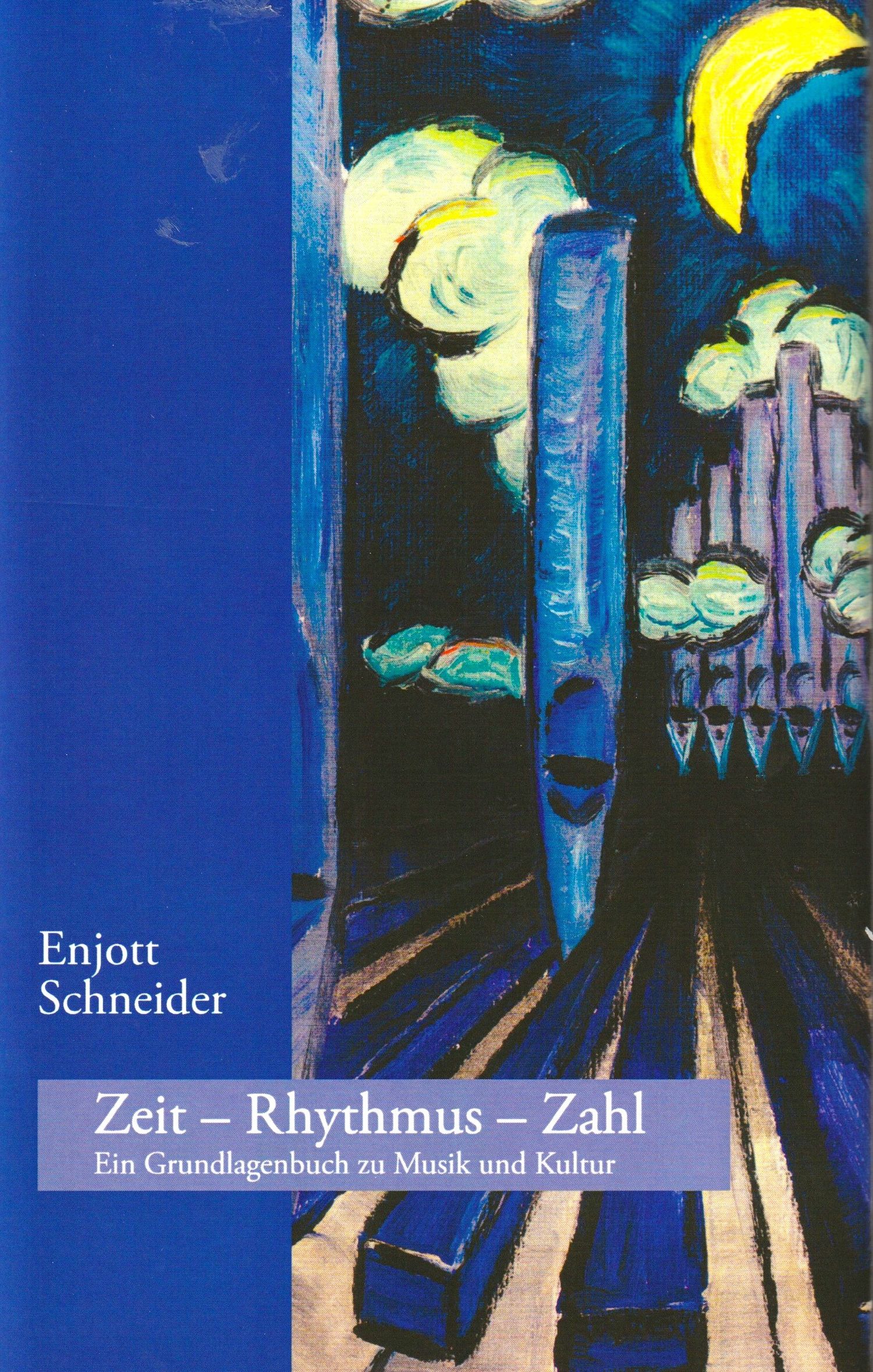
Zeit - Rhythmus - Zahl
Zeit - Rhythmus - Zahl. Ein Grundlagenbuch zu Musik und Kultur, Books on Demand 2003 (Reprint der Originalausgabe DIE KUNST DES TEILENS. ZEIT – RHYTHMUS – ZAHL, Piper-Verlag 1989) -
Carl Orff and repetitive music after 1960
Carl Orff and repetitive music after 1960, appeared in Annual II of the Bavarian Academy of Fine Arts, Munich (C.H. Beck publisher) 1988, p. 354-374 -
In memory of Jean Gebser "Diaphainon"
In memory of Jean Gebser "Diaphainon" by Peter Michael Hamel, Melos quarterly magazine 1988/3, p. 56-80 THE OTHER HINDEMITH, appeared in New Magazine for Music 1988, issue 12, p. 17-19 -
Pensieri Sulla Musica Elletronica per il Cinema
Pensieri Sulla Musica Elletronica per il CinemaAppeared in Trento Cinema. Incontri internazionali con la musica per il cinema 1988, Trento 1988, p. 56-57 -
Phases of Hindemith's reception 1945-1955
Phases of Hindemith's reception 1945-1955, appeared in The Hindemith Almanac 1984, p. 122-142 -
Improvisation today?
Improvisation today? Improvisation-Intuition-Spontaneity, appeared in "a tempo". the Munich Music Academy's magazine, issue 5 1987, p. 2-4 -
"I escape if I can"
"I escape if I can". Music and psychoanalysis in Franz hummel's Opera "Bluebeard", appeared in Music Texts, the Magazine for new Music, issue 19, 1987, p. 17-40 -
Zwischen Polytonalität und Geräuschmusik
Zwischen Polytonalität und Geräuschmusik. "Les Choeophores" von Darius Milhaud In: Melos Vierteljahrsschrift 1987/4 S. 2-33 -
Der musikalische Satz
Der musikalische Satz. Ein Handbuch zum Lernen und Lehren, hg.v. Walter Salmen und Norbert J. Schneider, Innsbruck (Helbling-Verlag) 1987, 291 S., darin Autor der Kapitel Rhythmus-Metrum-Takt; Aufgabensammlung zum vokalen Kontrapunkt; Choralsatz und Liedsatz; Durmollharmonik im 18./19. Jahrhundert; Harmonik nach 1900; Neue Rhythmik und Zeitgestaltung -
Film Music handbook I
Film music handbook I. Music dramaturgy in new German films, Munich (Ölschläger publishers, later Konstanz university publishers) 1986, issue 2 1990, p. 361 -
CINEMA by Erik Satie
CINEMA by Erik Satie. Aspects of a film score. Appeared in Melos quarterly magazine 1986/3, p. 40-61 -
Hindemith's opera "The Long Christmas Dinner"
Hindemith's opera "The Long Christmas Dinner" edited by Norbert J. Schneider as part of the Hindemith-Complete Edition (with critical account and introduction) volume I/11, Mainz (Schott publishers) 1986, p. 188 -
Olivier Messiaen; Alban Berg's orchestral songs
Olivier Messiaen; Alban Berg's orchestral songs; Historical thinking; Improvisation - Intuition - Spontaneity. Appeared in the program booklet of the European Year of Music, Munich 1985, edited by Norbert J. Schneider -
Aphorism...Paul Hindemith's later works
Aphorism...Paul Hindemith's later works. Appeared in The Hindemith-Days Munich 1984. A program booklet for the concerts and exhibition, edited by the Hindemith - Institute Frankfurt. -
The focal point of "1960" , the new music history
The focal point of "1960", the new music history "Spazio a 5" by Franco Evangelisti. Appeared in Melos quarterly magazine 1984/1 p. 4-16 -
Between reputation and speech: The choral work by Günter Bialas
Between reputation and speech: The choral work by Günter Bialas. Appeared in Günter Bialas (Composers in Bavaria volume 6) edited by A. Suder, Tutzing (Hans Schneider publishers) 1984, p. 75-99 -
The film - Richard Wagner's "Artwork of the Future?"
The film - Richard Wagner's "Artwork of the Future?" Appeared in Richard Wagner and... (writings of the Munich music academy, volume 4) Regensburg (Bosse publishers) 1983, p. 123-150 -
Henri Marteau - a forgotten organ composer
Henri Marteau - a forgotten organ composer. Appeared in Information of the Marteau House in Lichtenberg/Upper Franconia volume 2, Tutzing (Hans Schnieder publisher) 1983, p. 79-101 -
"Expression" with Anton von Webern
"Expression" with Anton von Webern (as well as three monographs on op.7, op. 11, op. 20). Appeared in Opus Anton Webern, edited by Dieter Rexroth, Berlin 1983 -
Robert Schumann 1. Symphony B-flat OP. 38, Munich
Robert Schumann 1. Symphony B-flat OP. 38, Munich 1982 (Schöningh publisher), Masterpieces of music. Appeared in Monographs of Music History volume 34, p. 64 -
Thornton Wilder and Paul Hindemith
Thornton Wilder and Paul Hindemith. About their exchange of letters at the creation of "The Long Christmas Dinner", the Hindemith Almanac XI 1982, p. 147-188 -
Die verminderte Quarte als Melodieintervall
The diminished as melody interval. A musical constant by Dufay to Schoenberg. Appeared in The Swiss Music Magazine CXX 1980, p. 205-212 -
The principles of the rhythmic arrangement in Hindemith's opera "Mathis the Painter"
The principles of the rhythmic arrangement in Hindemith's opera " Mathis the Painter", Hindemith Almanac VIII 1979, p. 7-48 -
The design process in a cycle of fifths
The design process in a cycle of fifths. A programmatic design of the semiotics of harmonic - tonal music. Appeared in the Archive for Musicology XXXVI 1979, p. 122-145 -
Pop Music
Pop Music. A purpose according to german press reviews from 1960-1968, Munich-Salzburg (Katzbichler publisher) 1978, p. 126 -
Around 400 lexicon entries about rock music/pop music
Around 400 lexicon entries about rock music/pop music for the F.A. Brockhaus publisher (Brockhaus-lexicon, Brockhaus-encyclopedia, Riemann. music lexicon, dtv-Brockhaus among others) -
Mediantisch Harmonics with Ludwig van Beethoven
Mediantisch Harmonics with Ludwig van BeethovenAppeared in the Archive for musicology XXXV 1978, p. 210-230